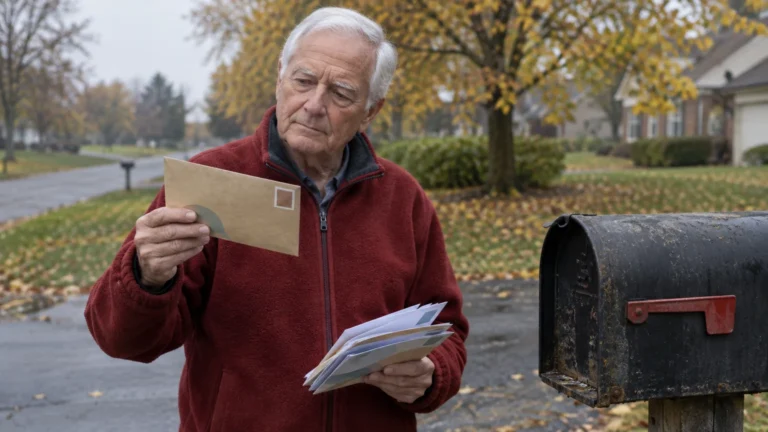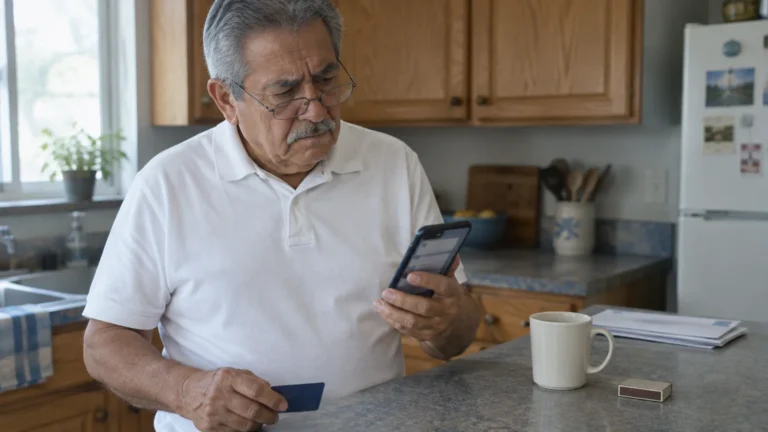
This guide is for one reader: a retiree in their 70s on a fixed income who inherited rural acreage in another state and manages it from an iPad.
The tax bill comes to your home address, you have not seen the land in years, and a letter just arrived offering fast cash for it.
Most guides stop at “ignore the letter.” The bigger decision is which name you put on a free county deed alert.
That matters more than whether you pay for monitoring.
If the county still lists your late parent as owner, an alert on your own name can stay silent while someone files a forged deed in your parent’s name.
In this guide7 sections
Why Inherited Land Draws These Letters
Buyers build mailing lists from public county tax records, which show the owner’s name and where the tax bill goes. An out-of-state address tells them you live far away.
Unimproved land has no tenant and often no mortgage lender watching the title. Nobody nearby will notice a stranger listing it for sale.
The FBI tracks scams against people 60 and older, including real estate fraud, in its annual FBI IC3 Elder Fraud Report.
Two threats hide behind these letters. A wholesaler contracts your land at a steep discount, then sells that contract to another investor for a profit.
An impostor never writes to you at all. They forge a deed in the recorded owner’s name and sell the land to a stranger.
Warning Signs in the Letter
Check the letter against this list before you do anything else:
Physical mail fraud is increasingly common, so learning how to spot deceptive mail can protect you from other fake property and benefits notices.
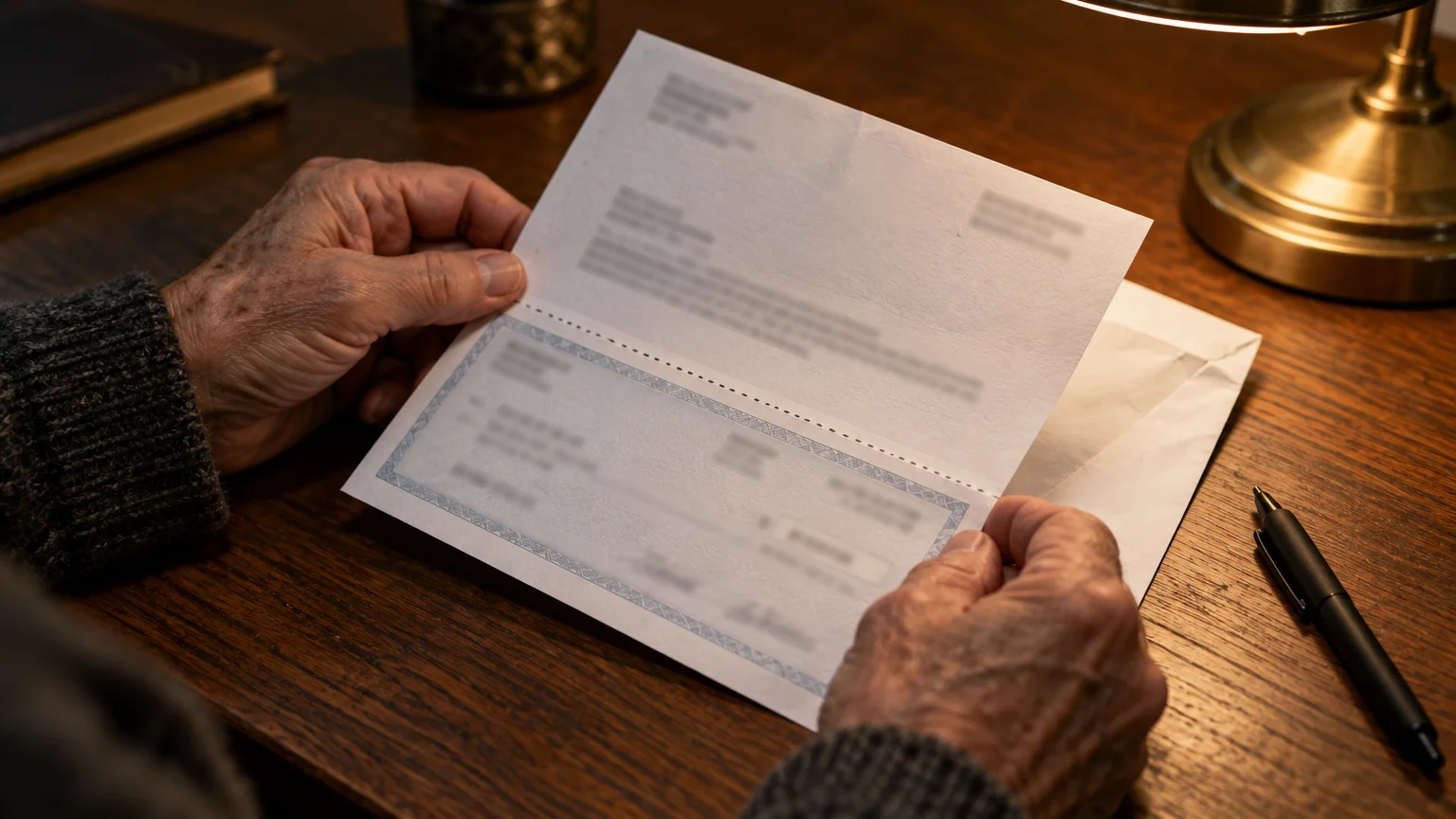
- A real check is enclosed, and the small print says cashing it accepts the terms or grants the buyer an option.
- A short deadline, or a warning that land values are about to fall.
- The return address is a PO box or mail drop, with no office you can look up.
- The contract lets the buyer assign it to someone else, the usual sign of wholesaling.
- They ask for copies of your ID by text or email, or offer to send their own notary.
The FTC guide on avoiding imposter scams describes the same pressure tactics: urgency, secrecy and payments that are hard to undo.
A lowball offer can be perfectly legal. You are still never obliged to answer it.

Worked Example: Checking the Offer From an iPad
Here is the whole process for our reader, start to finish, with the land two states away and an iPad as the only computer.
Step 1: Leave the check alone. Put the letter, check and envelope in one folder. Do not sign, endorse or deposit anything yet.
Step 2: Make the screen readable. Open Settings > Display & Brightness > Text Size and drag the slider right.
For larger sizes, open Settings > Accessibility > Display & Text Size > Larger Text. The Apple guide to making text bigger on iPhone shows the same menus your iPad uses.
Some county sites ignore that setting. In Safari, pinch outward with two fingers to zoom the page.
Step 3: Find the parcel number. It is on the land’s tax bill, labeled Parcel ID, APN or PIN; the wording varies by county.
Step 4: Look up the parcel. In Safari, search the county’s name plus Assessor. Pick the result with a .gov address or the county seal, then enter the parcel number.
Read the owner name on the record. It may show your name, your parent’s name, or Estate of followed by your parent’s name.
Write down every name exactly as spelled, plus the assessed value. Take a screenshot; the button combination varies by iPad model.
Step 5: Compare. Assessed value is a tax figure, not a sale price, but an offer far below it is a reason to slow down.
Step 6: Check recent filings. On the county recorder or register of deeds site, search the parcel or the names for new documents.
A deed, option or affidavit you did not sign calls for a phone call to the recorder that same day.
In our example, the land is still recorded in the late parent’s name. That one fact decides how the alert must be set up.

Set Up the County Alert on the Right Name
A county deed alert emails or texts you after a document is recorded under a name or parcel number you register. It does not block the filing; it shortens the time before you know.
Official county offices will never message you through social networks, so review how to avoid scams targeting seniors on social media if someone attempts to contact you online about your deed.
Not every county offers one. Look for Property Fraud Alert, Deed Watch or Recording Notification on the recorder’s site.
- Open the official recorder, register of deeds or clerk site for the county where the land sits, not where you live.
- Choose the alert service, then Register or Create Account; labels vary by county.
- Enter your own name exactly as it appears on any recorded deed.
- Add a second alert for your parent’s name, spelled exactly as on the parcel record, including any middle initial.
- Add the parcel number if the county offers parcel alerts. That catches a filing whatever name a forger uses.
- Use an email address you check daily, then confirm through the link the county sends.
If only one name is allowed, call the recorder’s office. Explain the land is inherited and ask how to watch a parcel still in a deceased owner’s name.
The reason is how deeds are filed. Recorders index each document by grantor, the person giving the land, and grantee, the person receiving it.
A forger posing as the owner signs as whoever is on record. If that is your parent, an alert on your name alone never matches.
It is also worth asking an attorney in the land’s state about recording your ownership. Until your name is on record, an impostor can claim to be the heir as easily as you can.
Warning: A county alert page should never ask for your Social Security number, a card number or a bank password. If it does, you are on a commercial site.
County Alerts Versus Paid Title Monitoring
Paid title monitoring is sold as deed protection. Like the county alert, it watches public recordings and tells you afterward.
Instead of paying high recurring fees for commercial title locks, retirees looking to manage monthly expenses can explore practical ways of saving money on internet bills instead.
| Option | Where you set it up | What it watches | Stops a forged deed being recorded? | Cost | Needs internet? |
|---|---|---|---|---|---|
| County deed alert | Recorder or clerk website for the land’s county | Names, and in some counties parcel numbers, you register | No; tells you after recording | Free where the county offers it | Yes, for sign-up and email or text alerts |
| Paid title monitoring | The company’s website | Records the company checks, on its own schedule | No; tells you after recording | Recurring fee shown on the company’s price page | Yes |
| Checking county sites yourself | Assessor and recorder websites | Whatever you search | No; you find it after recording | Free | Yes |
| Owner’s title insurance | Bought when land is purchased | Certain title problems from before the policy date | No; may pay a covered claim | One-time premium | No |
On a fixed income, the paid plan mainly buys convenience. Before paying, ask the company in writing which counties and which names it actually watches.
Neither option changes what the recorder accepts. Recorders generally check that a document meets filing rules, not that the signature is genuine.

If You Already Cashed the Check or Signed
- Call your bank’s fraud department if you deposited the buyer’s check, and ask what can still be stopped or returned.
- Reread what you signed for option or assignment wording, then ask the recorder whether anything has been filed on your parcel.
- If a document appears that you did not sign, report it to the sheriff in the county where the land sits and keep the report number.
- File a complaint through USA.gov scam reporting resources, which point you to the right agency.
- Call the AARP Fraud Watch Network helpline at 877-908-3360 to talk it through with a trained fraud specialist.
- Ask a real estate attorney in that state how to clear any option or forged deed from the record.
Keep the letter, envelope and check together. The postmark and return address help investigators.
If you deposited the check remotely on your tablet, brush up on using mobile banking apps safely so you can monitor your account statements for adjustments and stop-payment updates.
If you are dealing with financial fallout beyond the deed itself, review our general checklist on steps to take if you think you’ve been scammed.
Frequently Asked Questions
My late parent’s name is still on the county record. Should I worry?
Act rather than worry. Set a deed alert on that exact name and the parcel number, and ask an attorney in that state about recording your ownership.
If responding with a firm refusal leads to persistent follow-up calls from high-pressure buyers, take a moment to set up blocking unwanted calls on your smartphone.
Can someone sell my land without my real signature?
They can try. A forged deed can be recorded because recorders check filing rules, not signatures, which is why an alert on the recorded owner’s name matters.
What if I already deposited the check that came with the letter?
Call your bank’s fraud department, reread what you signed, and ask the county recorder whether an option or other document was filed on your parcel.
Is a paid title lock worth it on a fixed income?
Usually not as a first step. It also alerts after recording and cannot stop a filing, so set up the free county alert first where one exists.
Note: Menus and button names change with software updates. The iPad steps were written for iPadOS 26; if a screen looks different, Apple’s support page linked above has the latest wording.
ClearTechGuide is independent and is not affiliated with Apple or any company or county office mentioned.