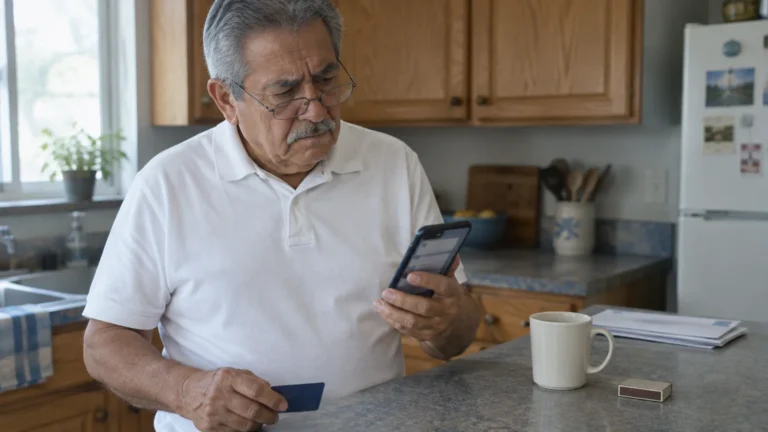
This guide is for one situation. You are in your early eighties and on Original Medicare.
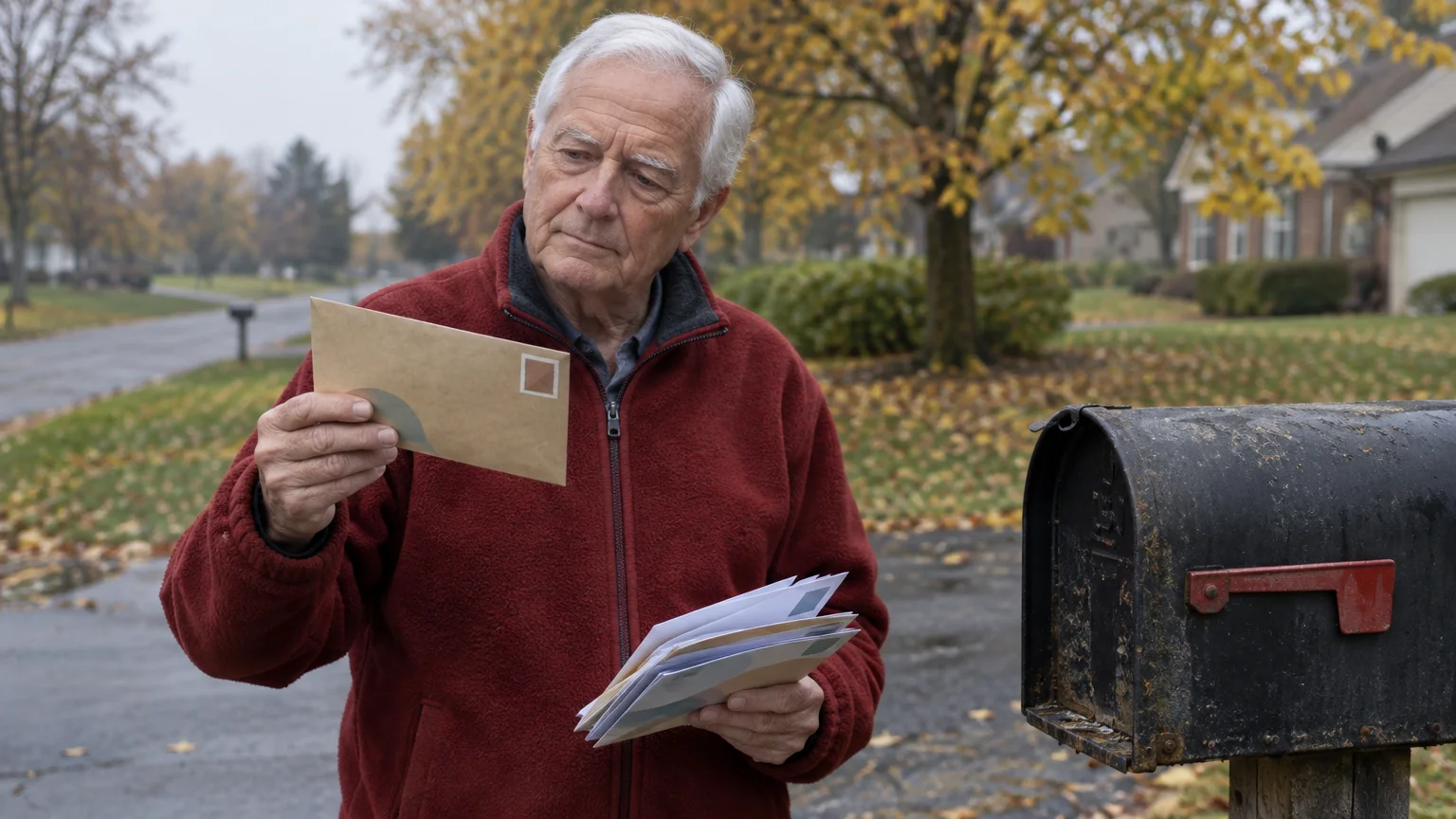
Each fall, your mailbox fills with brown envelopes marked with eagles and words like “Benefits Notice.”
A few are real letters from Social Security. Most are sales mail from private insurance marketers fishing for your phone and Medicare numbers.
Our advice: check the postage corner first, then the return address, before reading anything inside. A private marketer has no legal way to copy the government postage marking.
In this guide7 sections

Why the Postage Corner Beats the Fine Print
Most advice says to hunt for the disclaimer in tiny gray print. That works, but it is the last thing you find, and it sits where tired eyes skip it.
Just as deceptive envelopes target your physical mailbox, scammers also send fake delivery alerts, making avoiding package delivery scams another important habit for keeping your mail safe.
Deceptive letters in your physical mailbox are not limited to healthcare; many property owners also encounter vacant land purchase scams in the mail that use similar official-looking envelopes.
The upper-right corner is different. Federal agencies, including Social Security, mail under the government’s penalty mail program, which private companies cannot use.
So a genuine notice shows “Postage and Fees Paid,” the agency’s name and a “G” permit number (such as G-11) in the postage corner, with “Official Business, Penalty for Private Use” under the upper-left return address.
A marketer pays like any business, so its corner shows a permit number, a meter strip or a stamp.
Bulk sales mail usually adds “Presorted,” often shortened to “PRSRT STD” or “PRSRT MKT,” with “U.S. Postage Paid” and a city. Social Security’s own letters have no reason to carry that.
Eagles and stern warnings can be imitated. The Social Security Administration scam advisory page adds a second rule: the agency does not demand immediate payment or a callback to a number you cannot verify.
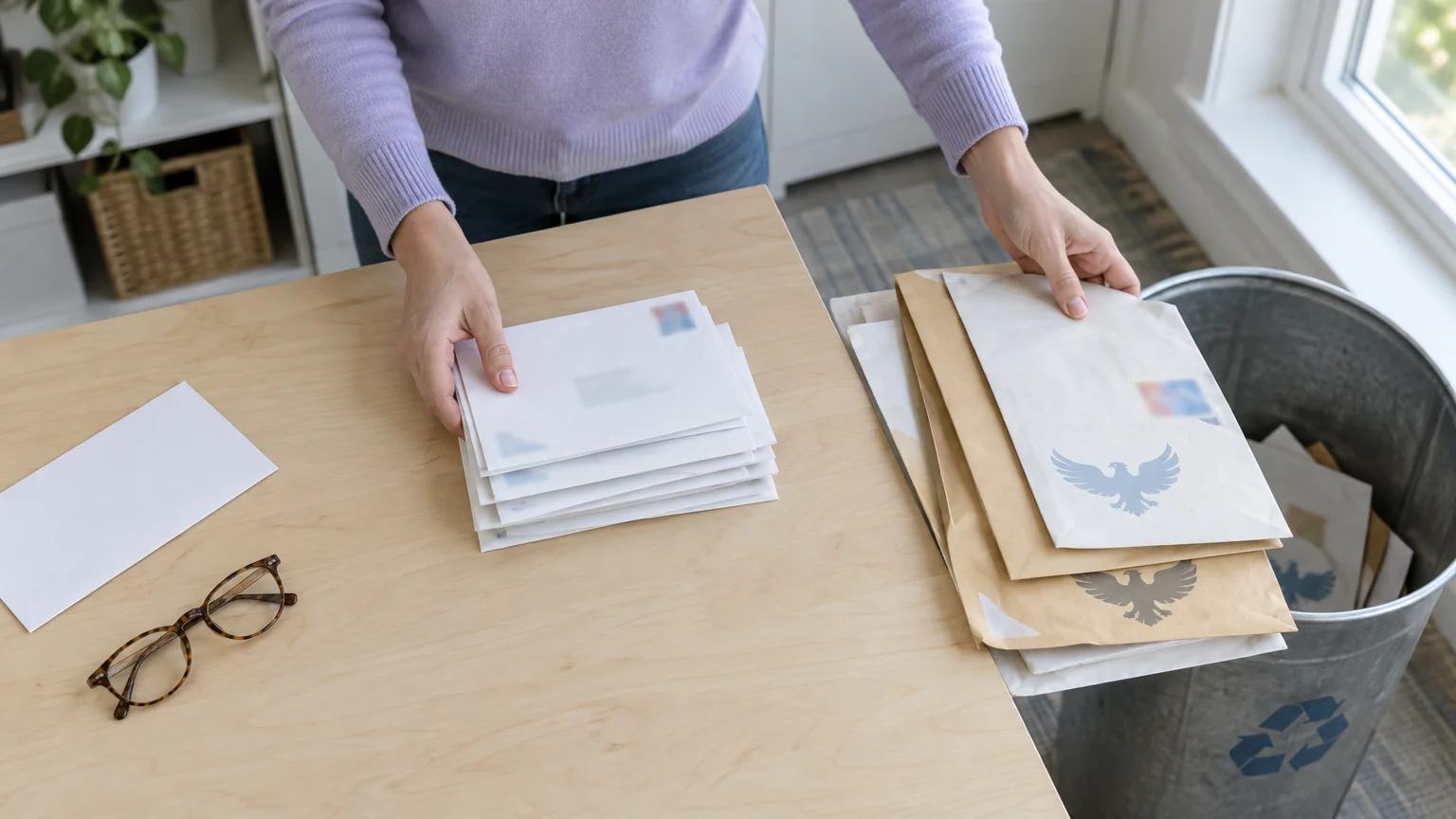
Real Social Security Notice vs. Medicare Advantage Mailer
Lay the two envelopes side by side. This table is a composite of features common to each type, not a copy of one company’s mailer.
| Where to look | Real Social Security notice | Typical Medicare Advantage sales mailer |
|---|---|---|
| Postage corner (upper right) | “Postage and Fees Paid,” the agency’s name, and a “G” permit number (such as Permit No. G-11) | “Presorted” or “PRSRT,” “U.S. Postage Paid,” a city and a permit number; sometimes a meter strip |
| Return address (upper left) | Social Security Administration, an office address, and “Official Business, Penalty for Private Use, $300” directly below | A vague name such as “Benefits Center” and a P.O. box |
| Front wording | Your name and address, plain text | “Time Sensitive,” “Second Notice,” eagles or flags |
| Inside | Your benefit details, with 1-800-772-1213 or ssa.gov for questions | A plastic “allowance” card and a reply form asking for birth date, phone and Medicare number |
| Fine print | None needed; it is the agency | A line saying the sender is not connected with or endorsed by the government or Medicare |
The return address is your second check. Social Security names itself; a marketer often uses a department-sounding name and a P.O. box, so the envelope reveals nothing about the sender.
The Federal Trade Commission guide on imposter scams describes the same trick by phone and email: borrow a trusted agency’s look, then rush you.
One caution: if you already have a Medicare Advantage or supplement plan, your insurer’s own mail uses a commercial permit too. Match the company name to your plan card.
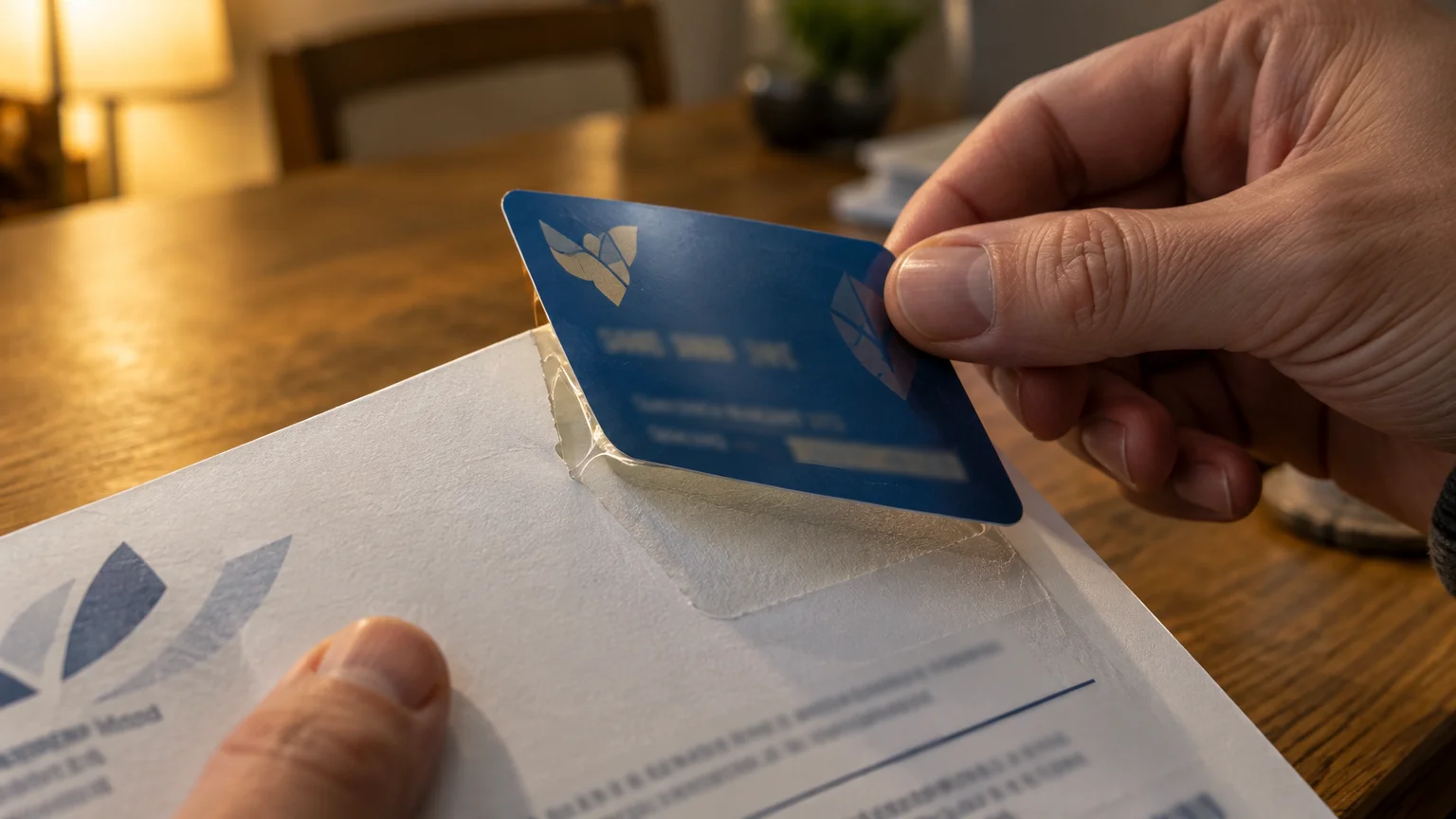
Fake Benefit Cards and the Disclaimer on the Back
Many mailers include a plastic “flex card” promising money for groceries, dental care or utilities. Original Medicare and Social Security do not issue these cards.
Misleading insurance ads and exaggerated benefit offers also spread widely online, so learning how to avoid common scams targeting seniors on social media provides extra peace of mind.
When double-checking claims about medical perks or prescription savings, knowing how to find reliable health information online helps you verify what Medicare actually covers.
Some Medicare Advantage plans do give extra-benefit cards to their own members. The card in a sales envelope is not money; returning the reply form invites sales calls about switching plans.
This mail peaks during Medicare Open Enrollment, October 15 to December 7, and again from January 1 to March 31, the Medicare Advantage Open Enrollment Period.
To read the disclaimer, use your iPhone. Open the Magnifier app (swipe down on the Home Screen and type “Magnifier”), point the camera at the print, and drag the zoom slider.
For a shortcut, go to Settings > Accessibility > Accessibility Shortcut and tick Magnifier. Triple-click the side button (the Home button on older models) to open it.
Apple’s guide to making text bigger on iPhone and iPad covers larger on-screen text. On Android 16, magnification is under Settings > Accessibility; the wording varies by model.
Worked Example: One Envelope, Start to Finish
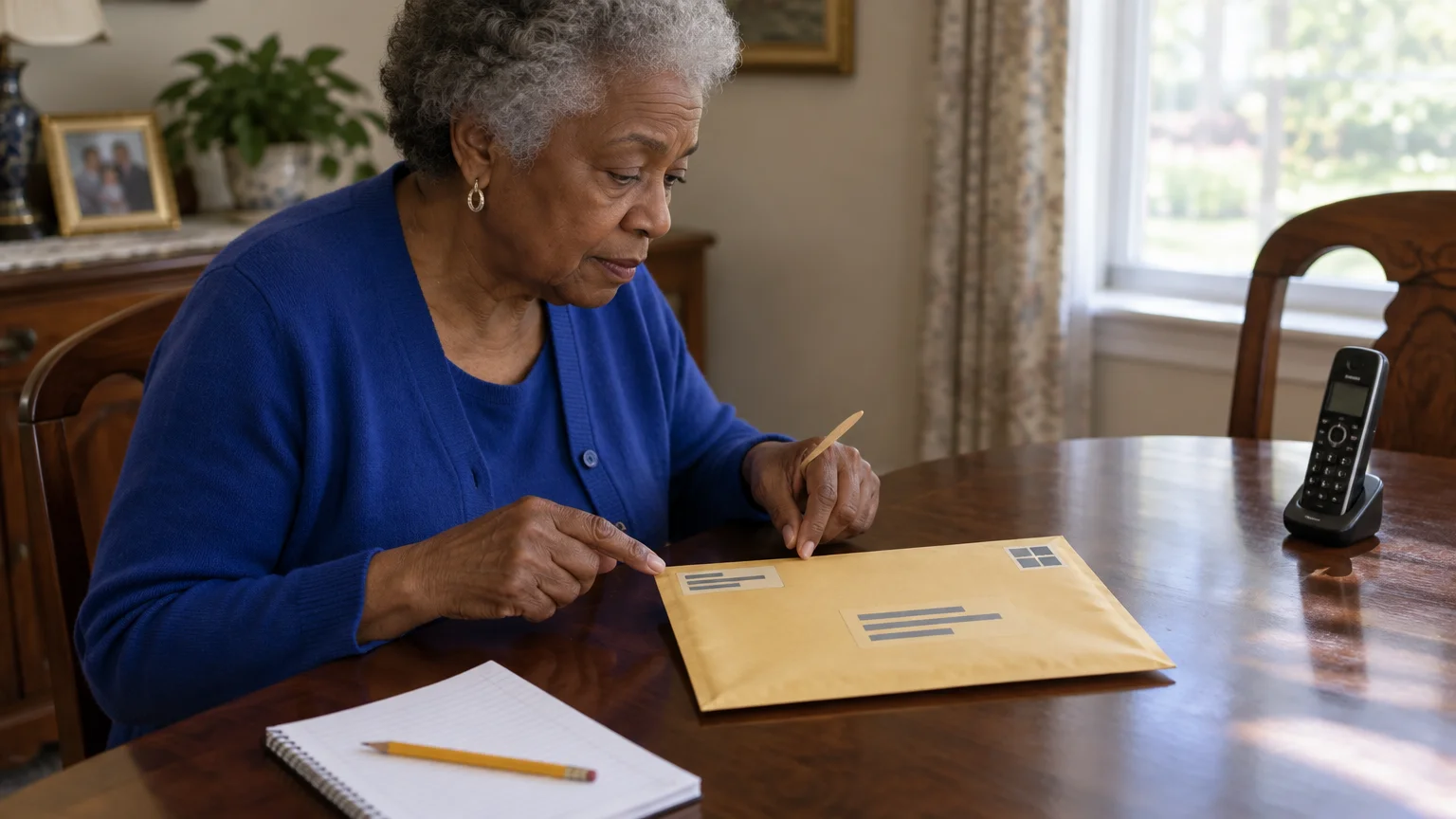
It is late October. An 81-year-old on Original Medicare with a supplement plan finds a brown envelope reading “Important Medicare Benefits Information.”
If you prefer checking your benefits account on a computer rather than waiting on the phone, see how to pass Login.gov verification for Social Security without difficulty.
- Postage corner. “PRSRT STD, U.S. Postage Paid,” a city and a regular permit number—not “Postage and Fees Paid, Social Security Administration.” A private company paid to mail it.
- Return address. “Benefits Processing Dept.” and a P.O. box. No agency, no company name.
- Inside. A plastic card printed with a grocery allowance, and a reply form asking for birth date, phone number and Medicare number.
- Back panel, through Magnifier. A gray line says the sender is not connected with or endorsed by the government or Medicare. Confirmed: sales mail.
- Check the offer safely. Call 1-800-MEDICARE (1-800-633-4227), never the mailer’s number, to ask what your coverage actually includes.
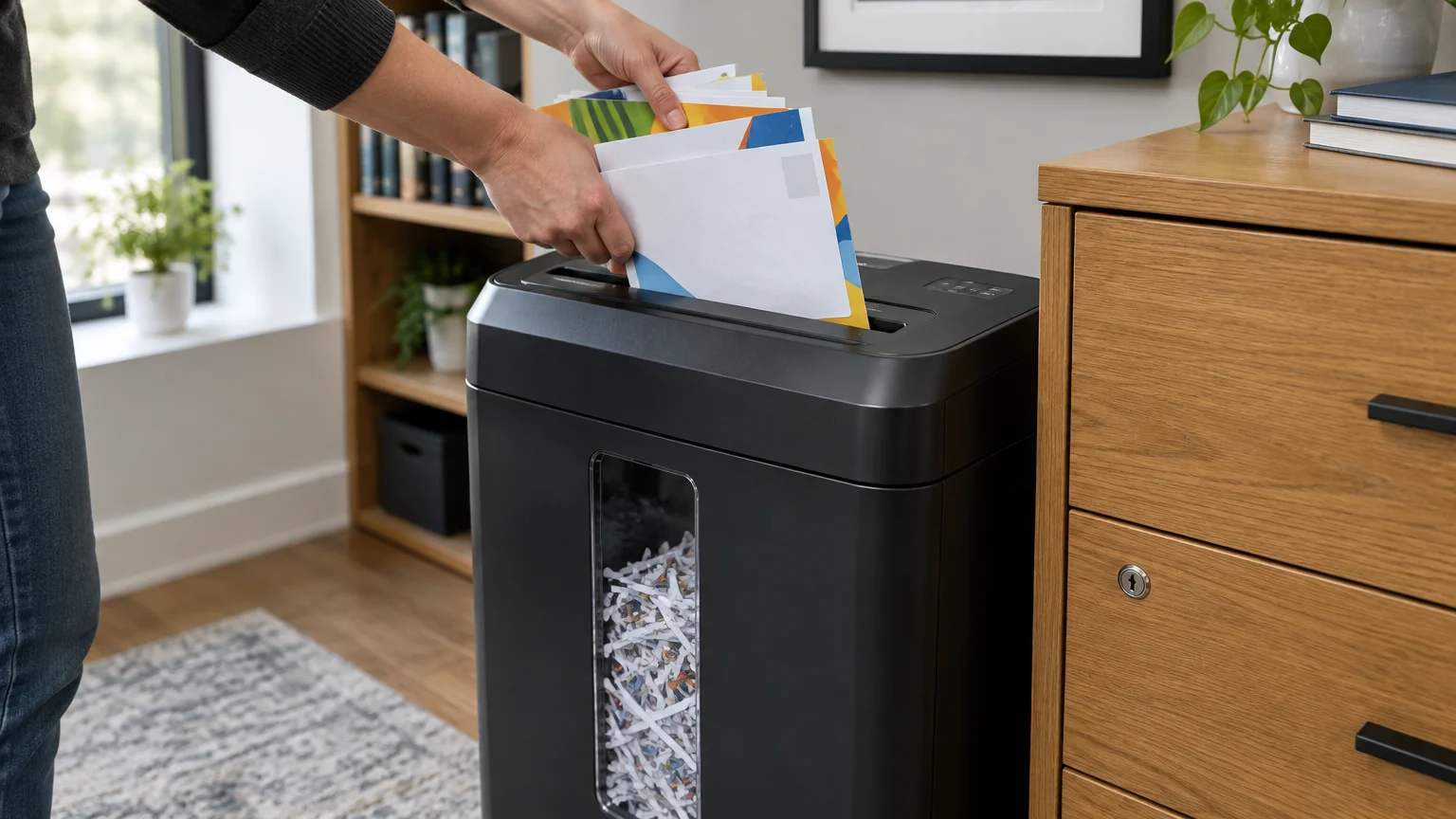
- Shred the reply form, then set up the tools below so fewer arrive.
Later, an envelope arrives with “Postage and Fees Paid, Social Security Administration” in the postage corner and “Social Security Administration” with “Official Business” at the return address. Same checks, opposite result: open it and read it.
If that real letter still worries you, call 1-800-772-1213 or sign in at ssa.gov, not a number someone else gives you.
Tools That Shrink the Pile
No service stops every mailer, but these three cut the volume or give you warning. Each handles a different kind of mail.
If you regularly monitor your household mail and incoming shipments, you might also find it helpful to learn how to track a USPS package on your phone.
| Tool | Where you sign up | What it changes | Cost | Needs internet? |
|---|---|---|---|---|
| DMAchoice | dmachoice.org or its mail-in form | Removes you from lists used by participating marketers | Small fee, shown before you pay | No |
| OptOutPrescreen | optoutprescreen.com or 1-888-5-OPT-OUT (1-888-567-8688) | Stops prescreened credit and insurance offers built from credit bureau lists | No charge | No |
| USPS Informed Delivery | usps.com | Blocks nothing; emails pictures of letter fronts due today | No charge | Yes, plus email |
For this reader, Informed Delivery pairs well with the postage check. Zoom into the emailed scan and you can often spot a permit block or P.O. box before walking to the mailbox.
Step-by-step: DMAchoice
- Type dmachoice.org into your browser’s address bar.
- Choose the option to register; the button wording changes from time to time.
- Enter your name and address exactly as they appear on your mail, plus an email address.
- Pick the categories to stop. Read each description; insurance offers may fall under a general category.
- Check the summary, pay the fee shown, and keep the confirmation email.
Expect a gradual fade over weeks or months, since mailers are often printed and addressed in advance. Lead generators outside these lists will still reach you, so keep checking the postage corner.

If You Already Mailed the Card Back
Returning a card cannot switch your plan by itself. The risk is the call that follows, where an agent tries to enroll you in a new plan.
You can say no and hang up. Never give your Medicare or Social Security number to someone who called you.
- Shared your Medicare number? Call 1-800-MEDICARE (1-800-633-4227) and confirm your coverage has not changed.
- Shared your Social Security number or bank details? Call 1-800-772-1213 and check that your direct deposit is unchanged.
- Report the mailing to the U.S. Postal Inspection Service at 1-877-876-2455 or uspis.gov.
- Find where to report impersonation through the USA.gov scam reporting directory.
If someone may be using your identity, the FTC identity theft recovery resource builds a personalized recovery plan with you.
Frequently Asked Questions
What should a genuine Social Security envelope show?
The agency’s name in the return address with “Official Business” and “Penalty for Private Use” right below it, plus “Postage and Fees Paid, Social Security Administration” in the postage corner. The letter points you to 1-800-772-1213 or ssa.gov.
Why do insurance marketers make mail look like a government notice?
An official-looking envelope gets opened. The goal is a returned reply card with your phone number, which becomes a sales lead.
Is a Medicare flex card that comes in the mail ever real?
Original Medicare does not send them. Some Medicare Advantage plans give cards to their own members, but a card arriving with a sales letter is advertising, not money you already have.
How soon will opting out cut the mail?
Gradually. Many mailers are printed weeks or months ahead, so expect a slow fade rather than an instant stop, and keep checking the postage corner meanwhile.
Note: Menus and button names change with software updates. These steps were written for current versions; if a screen looks different, the maker’s support page linked above has the latest wording.
ClearTechGuide is independent and not affiliated with Apple, Google or any company mentioned.