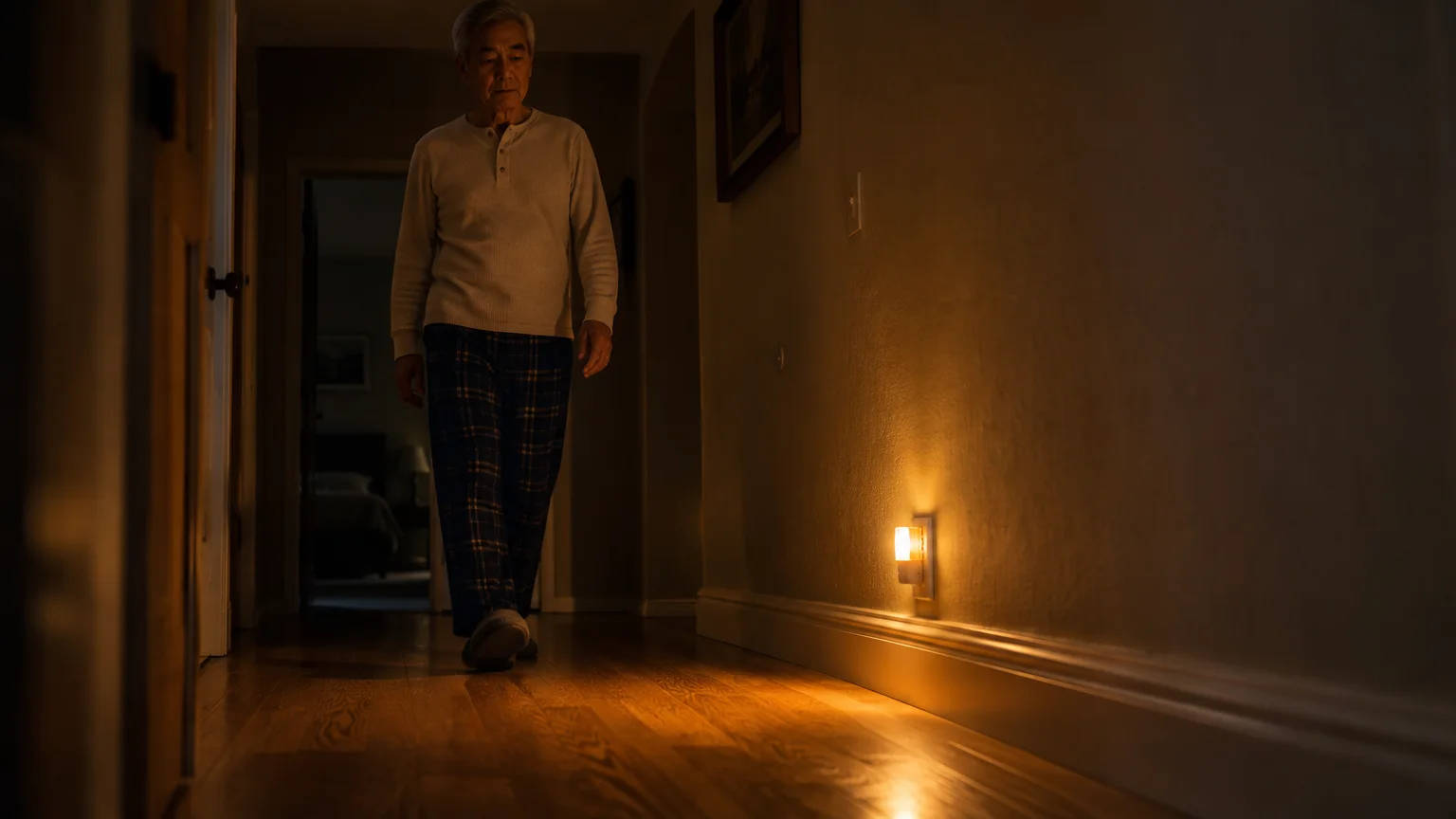
Setting up motion-activated night lights eliminates hazardous dark zones between your bed and the bathroom. A proper floor-level glow guides your steps without blinding your eyes or disturbing your rest.
Pairing your fixtures with a voice assistant like Amazon Echo also lets you illuminate rooms without reaching for a physical wall switch.
Most guides recommend bright white lights, but harsh daylight beams actually destroy night vision and interrupt your sleep cycle. Installing warm amber LEDs into low wall outlets creates a safe path that illuminates flooring without shining directly into your eyes.
This setup guide explains exact outlet heights, warm color temperatures, and sensor angles designed to prevent nighttime stumbles. You can create reliable, automatic path lighting through your entire hallway in under twenty minutes.
In this guide8 sections
- Why Nighttime Hallway Falls Happen
- Amber Versus White Light for Night Vision
- Choosing the Right Plug-in Motion Sensor Light
- Outlet Placement Heights and Detection Angles
- Step-by-Step Hallway Installation Guide
- Worked Scenario: Eleanor’s Hallway Setup
- Integrating Smart Home Plugs and Routines
- Frequently Asked Questions
Why Nighttime Hallway Falls Happen
More than one in four Americans aged 65 and older fall each year, totaling over 14 million reported incidents according to federal health data. These events represent the leading cause of fatal and nonfatal injuries among older adults across the country.
For comprehensive fall protection, setting up a personal emergency response system guarantees immediate contact with dispatchers in the event of an accident.
While automated lighting lowers nighttime hazards, pairing your home setup with a reliable medical alert device provides added peace of mind if an accidental slip ever occurs.
Hospital emergency departments treat approximately 3 million older adults for fall-related injuries annually. These accidents generate more than $50 billion in direct medical expenditures every single year.
Peer-reviewed emergency room studies reveal that indoor falls concentrate along specific nighttime transit routes. The bedroom accounts for 25.0 percent of indoor falls, stairs represent 22.9 percent, and bathrooms total 22.7 percent.
Walking to the bathroom during dark hours creates unique physical hazards. Your eyes require several minutes to adjust from total darkness to sudden illumination when you switch on an overhead fixture.
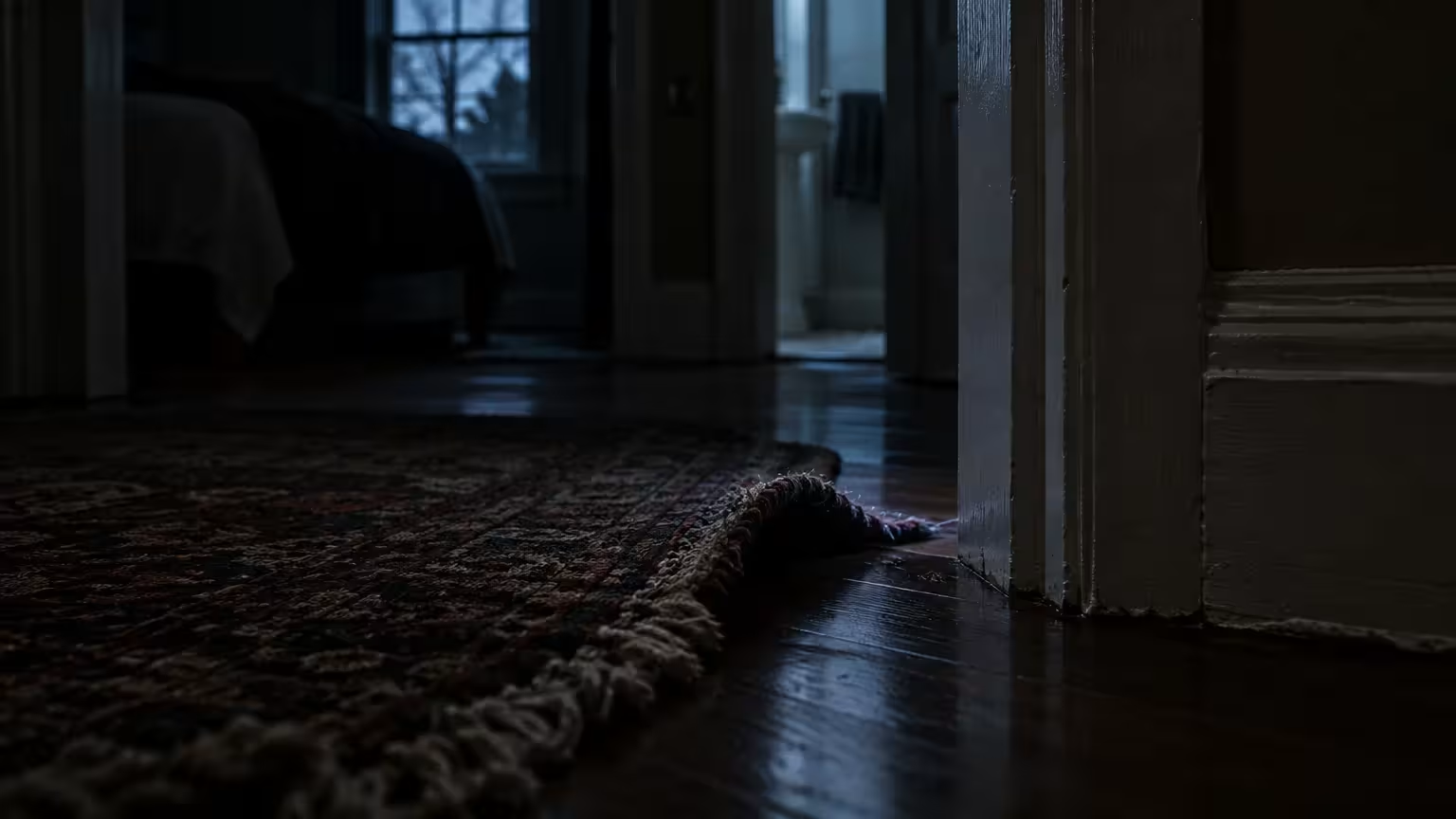
Waking abruptly leaves the nervous system in a sluggish state. Combining groggy balance with pitch-black corridors dramatically increases your chances of catching a toe on a rug edge or baseboard corner.
Installing targeted safe path lighting hallway fixtures solves this problem at the floor level. Using an automatic motion sensor night light senior falls can be prevented before your feet lose their orientation.
Amber Versus White Light for Night Vision
Light fixtures measure their color appearance in Kelvin, which defines whether an illuminated bulb looks warm and golden or cold and blue. A Kelvin rating describes the visual warmth of a light source on a numeric scale from warm red to cold blue.
If you monitor your nighttime rest with a wearable device, plan when to charge your smartwatch if you wear it to bed so tracking continues uninterrupted.
Just as with hallway fixtures, learning how to adjust screen brightness on your phone before bedtime helps prevent harsh glare from waking your eyes.
Standard daylight bulbs produce light between 5,000K and 6,500K. These cool, bluish wavelengths stimulate daytime alertness by signaling your brain to stop producing melatonin, the hormone responsible for maintaining deep sleep.
Cool white light also damages your immediate visual acuity in the dark. Your pupils expand widely during sleep to capture faint traces of ambient light across the room.
When a 5,000K white bulb switches on suddenly, your wide pupils absorb an overwhelming blast of photons. This sudden exposure causes instant glare, temporarily blinding your central field of view and making nearby shadows appear pitch black.
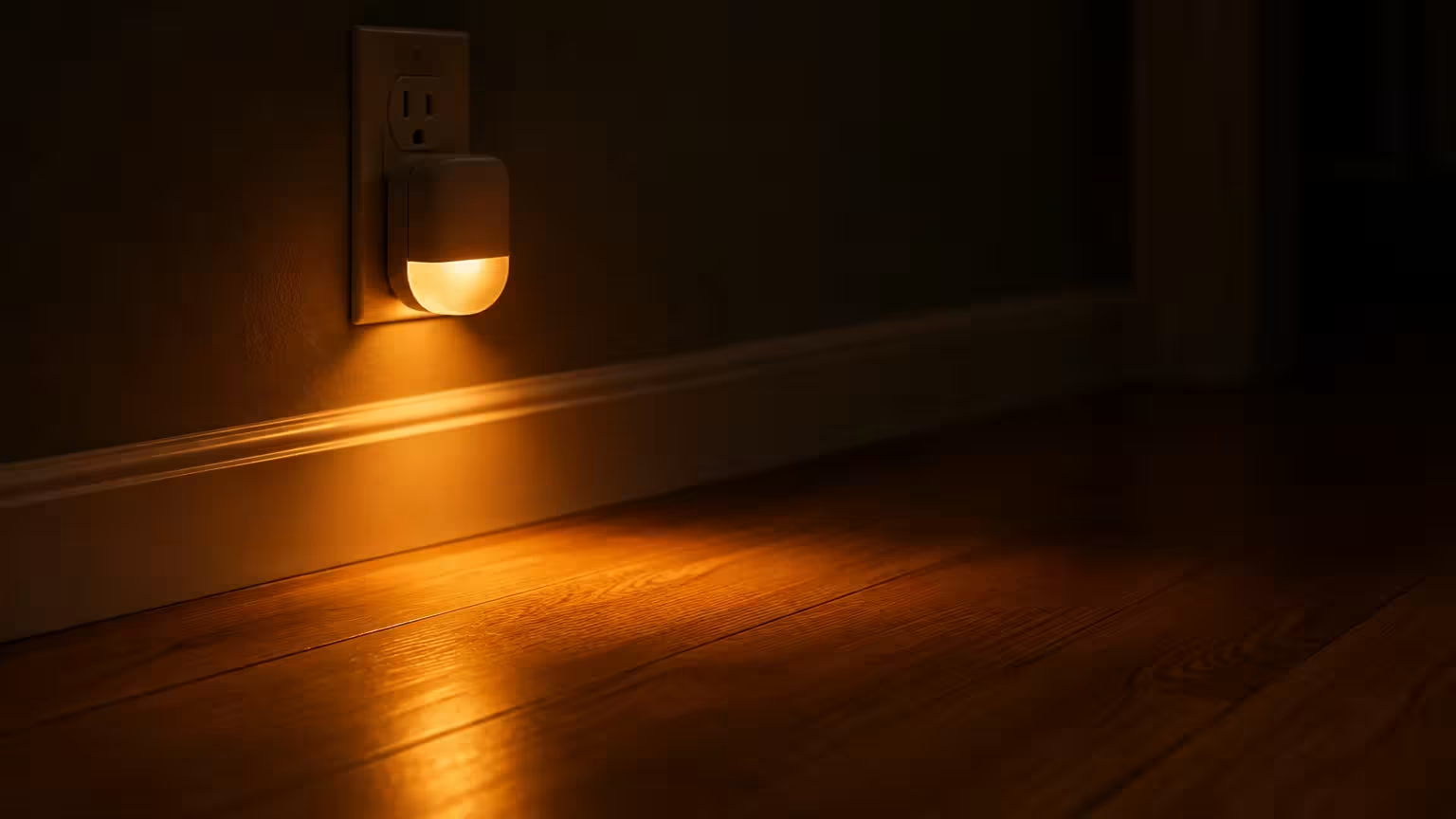
Warm amber lighting operates between 2,200K and 2,700K. These longer light wavelengths do not suppress melatonin production, allowing you to return to sleep quickly once you get back into bed.
Amber illumination also prevents the blinding pupil snap caused by daylight models. The softer glow keeps your peripheral vision active while providing sharp visual contrast along floor moldings and doorways.
Brightness levels require strict moderation as well. Lighting specialists recommend keeping nighttime path lights strictly between 5 and 30 lumens.
A lumen measures the total amount of visible light emitted by a single bulb. Output levels exceeding 40 to 50 lumens generate excessive reflection on polished hardwood, tile, and vinyl flooring.
Choosing the Right Plug-in Motion Sensor Light
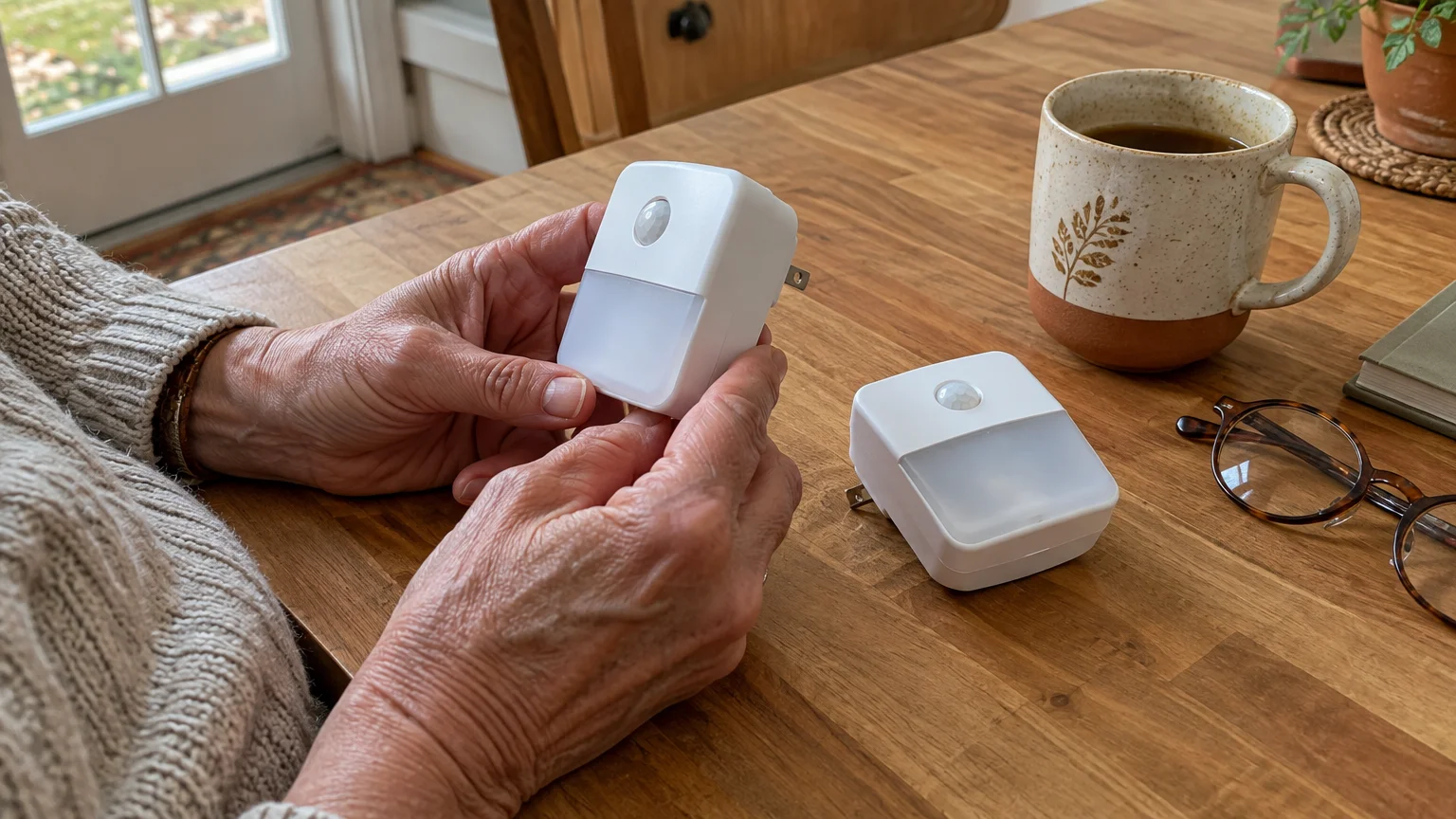
Selecting reliable hallway night lights plug in hardware requires checking electrical safety listings before making a purchase. Any model plugged into your wall continuously must carry safety certification from a recognized testing laboratory.
While basic night lights use minimal power, learn how to safely schedule a smart plug for heaters if you also plug heavy warming appliances into hallway outlets.
If your preferred floor lamp lacks a sensor, you can easily control it instead by setting up a smart plug on a low-light evening schedule.
Look for certification emblems from Underwriters Laboratories (UL) or Intertek (ETL) stamped directly onto the plastic housing. These marks verify that the device resists overheating during extended operational cycles.
Modern LED units consume between 0.3 and 1.0 watt of electricity. At standard residential power rates across the United States, each light costs less than $0.50 per year to operate.
Standard retail multi-packs containing two to four UL-compliant motion lights cost between $12 and $25 as of 2026. Avoid uncertified discount hardware shipped from overseas storefronts without established domestic electrical listings.
When purchasing electrical equipment over the internet, follow the FTC guidance on secure online shopping to confirm merchant legitimacy and avoid counterfeit electronics. Verify that the product listing specifies exact Kelvin temperatures rather than generic terms like bright or soft.
| Lighting Feature | Amber Plug-in Sensor | Cool White Daylight Sensor | Standard Always-On Light |
|---|---|---|---|
| Color Temperature | 2,200K to 2,700K (Warm) | 5,000K to 6,500K (Cool) | 2,700K to 3,000K (Soft White) |
| Lumen Output Range | 5 to 25 Lumens (Adjustable) | 40 to 80 Lumens (Fixed) | 10 to 30 Lumens (Fixed) |
| Sensor Activation | Passive Infrared (Motion) | Passive Infrared (Motion) | Photocell (Dusk-to-Dawn) |
| Pupil Glare Impact | Negligible / Preserves Night Vision | High / Causes Glare Blindness | Moderate / Constant Low Glow |
| Annual Operating Cost | Under $0.50 per unit | Under $0.50 per unit | $1.50 to $3.00 per unit |
| Pack Price (as of 2026) | $15 to $25 (3-pack) | $12 to $20 (3-pack) | $10 to $18 (4-pack) |
Choose models featuring an adjustable slide switch for lumen output. Being able to set the light between low, medium, and high allows you to calibrate brightness for different hallway widths.
Look for units with downward-angled diffuser lenses. Lenses angled toward the baseboards cast their full illumination onto walking surfaces rather than radiating upward into your eyes.
Outlet Placement Heights and Detection Angles
Most plug-in motion lights rely on a passive infrared sensor, commonly abbreviated as PIR. A passive infrared sensor detects moving heat signatures emitted by warm bodies against cooler room backgrounds.
Keeping bedside outlets clear also makes it easier to set up an Alexa device to call for help by voice during a nighttime emergency.
Standard indoor PIR sensors provide a detection field spanning a 100-degree to 120-degree cone. Their practical detection range reaches between 8 and 15 feet along unobstructed floors.
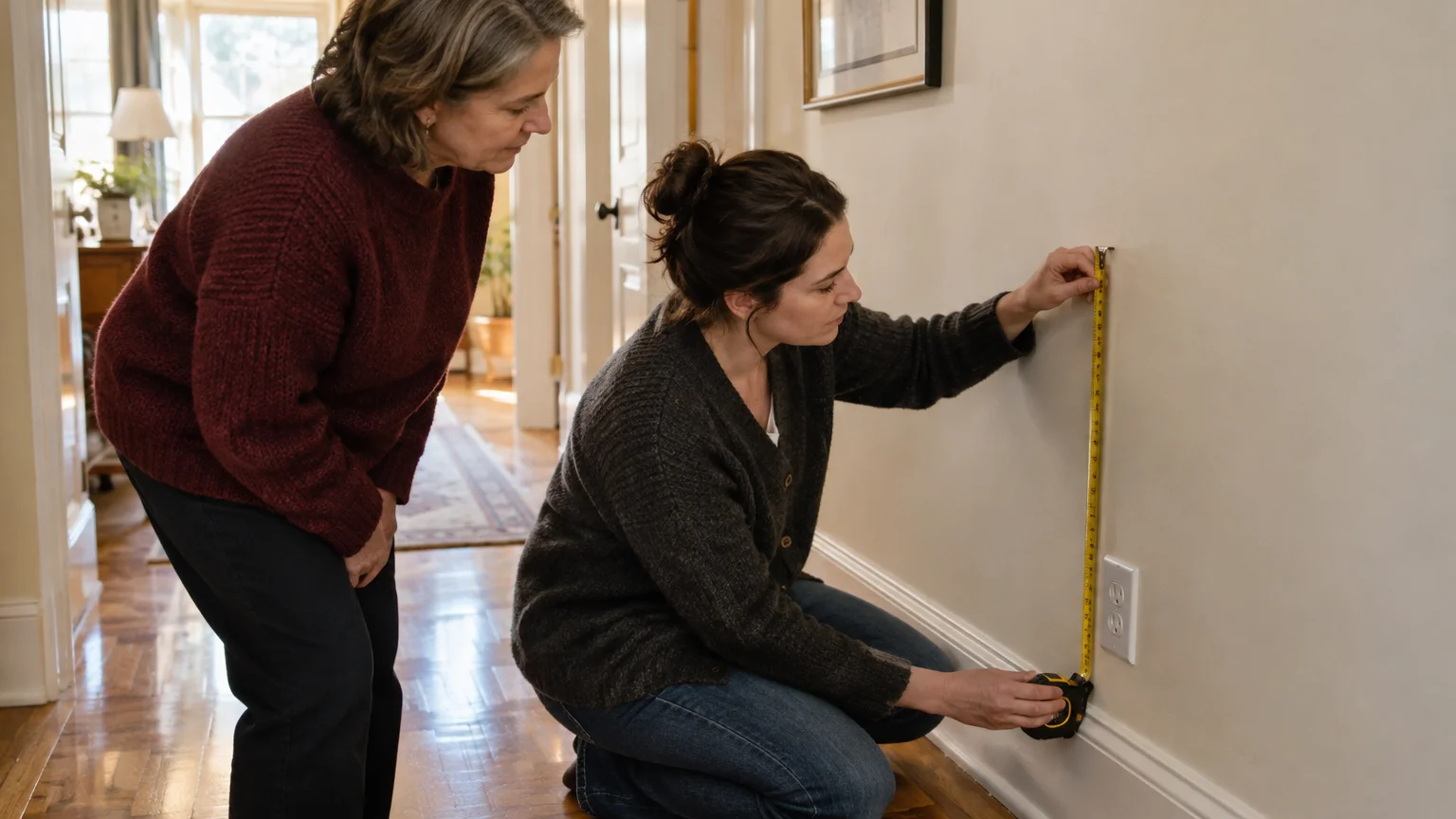
In standard residential construction, electrical wall outlets sit roughly 12 to 16 inches above finished floor coverings. This baseboard level offers the ideal height for catching foot motion while shielding your eyes from glare.
Plugging the light into the lower socket of a duplex wall outlet keeps the fixture approximately 12 inches from the floor. This position ensures the sensor cone scans across your ankles and slippers as you approach.
The lower socket position also leaves the upper electrical socket open for vacuum cleaners or medical equipment. Ensure the upper socket remains accessible without blocking the night light’s motion lens.
Be careful when placing sensors near the bedroom exit. If the sensor lens points directly toward your mattress, rolling over in bed can accidentally trigger the light.
Rotate or reposition the sensor so its detection cone runs parallel to your hallway wall. This alignment ensures the fixture stays off until your feet physically touch the hallway rug.
- Keep sensor lenses pointed across walking lanes rather than toward bed frames or heating vents.
- Ensure the line of sight remains clear of hanging drapes, plant leaves, and open closet doors.
- Avoid placing lights directly opposite large decorative mirrors, which can reflect ambient light and confuse optical sensors.
- Space multiple plug-in units roughly 8 to 12 feet apart to ensure seamless beam overlap without dark dead zones.
Step-by-Step Hallway Installation Guide
Before handling your lighting units, verify that your hands are completely dry. Review the casing markings to confirm that the electrical certification symbol matches your home safety expectations.
If you choose internet-connected smart night lights instead of standalone units, troubleshooting common Wi-Fi problems will help resolve any pairing hiccups.
For overhead fixtures or bedside lamps, you can also explore using smart light bulbs that automatically dim to warm amber tones after dusk.
If the tiny print on the back of the plug casing strains your vision, you can use your smartphone as an electronic magnifying glass.
Open the built-in magnifying feature detailed in the Apple guide to iPhone accessibility features to read small serial numbers and wattage ratings under bright digital zoom.
If you use an Android device, you can activate the screen magnifier through the tools described in the Google Android accessibility overview. Taking a quick illuminated photo of the product label allows you to pinch and expand the text to comfortable sizes.
- Inspect the rear prongs of the night light to verify they are straight, clean, and free of packing plastic.
- Locate the physical control switch on the bottom or side rim of the light casing and slide it to Auto.
- Select your preferred brightness level by moving the secondary slider to Low or 15LM.
- Grasp the outer plastic edges of the unit, keeping your fingers away from the metal blades.
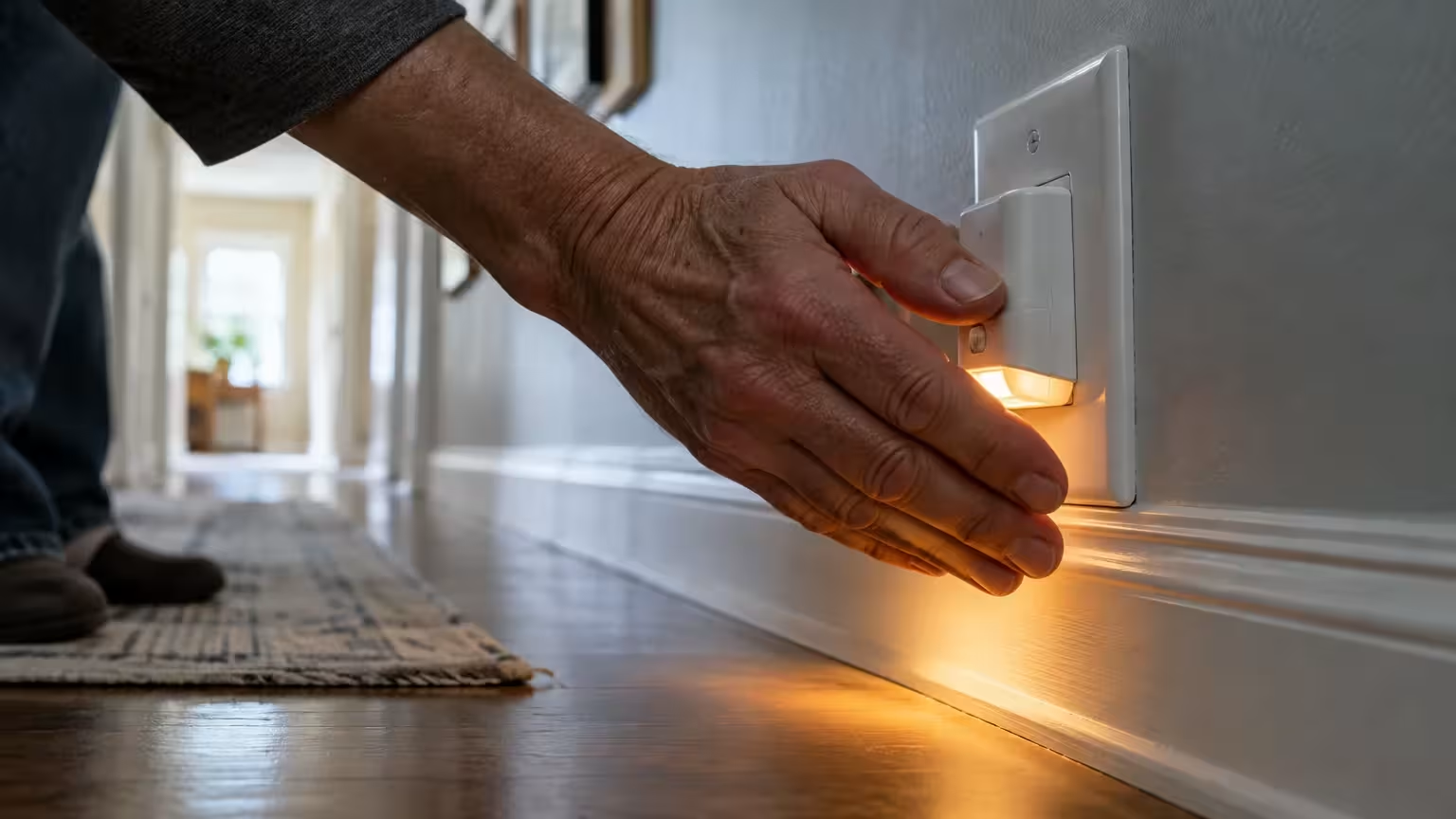
- Align the electrical prongs with the lower socket of your chosen hallway receptacle.
- Push the unit straight forward into the wall plate until the rear casing rests flush against the plastic outlet cover.
- Turn off the overhead hallway light fixture to simulate nighttime darkness.
- Step into the bedroom doorway, pause for five seconds, and take two normal strides down the hall to trigger the sensor.
- Remain completely still for 60 seconds to confirm that the internal timer turns off the illumination automatically.
If the light fails to illuminate when you walk past, inspect the front face for a tiny ambient light photocell. A photocell detects natural room brightness and keeps the motion sensor disabled during daytime hours.
Cover the photocell window with your thumb in a lighted room to test its operation. If the LED illuminates while covered, the unit functions normally and is waiting for actual evening darkness.
Worked Scenario: Eleanor’s Hallway Setup
Eleanor is an 83-year-old homeowner who lives alone in an older ranch-style house. Over the past three months, she experienced two near-miss balance losses while walking to the bathroom at night.
In addition to pathway lighting, many families choose to set up an Alexa device to call for help through simple hands-free voice commands.
Her home features a straight corridor measuring 22 feet long by 3.5 feet wide. Three electrical outlets line the baseboard, spaced approximately 8 feet apart at a height of 14 inches above the hardwood floor.
Eleanor previously used a 60-watt daylight overhead fixture controlled by a wall switch near her bed. Turning on that overhead light produced intense glare, while leaving it off forced her to shuffle through pitch-black shadows.
To eliminate this hazard, she ordered a three-pack of UL-listed, warm amber motion sensor lights costing $19.99 as of 2026. Each unit produces 2,400K warm illumination with an adjustable output toggle set to 15 lumens.
Eleanor inserted the first unit into the outlet outside her bedroom door. She angled its 110-degree sensor downward along the floorboards so that rolling over in bed would not trigger the beam.
She plugged the second unit into the hallway midpoint outlet, located 11 feet down the corridor. She placed the third unit into the outlet directly beside the bathroom doorframe.
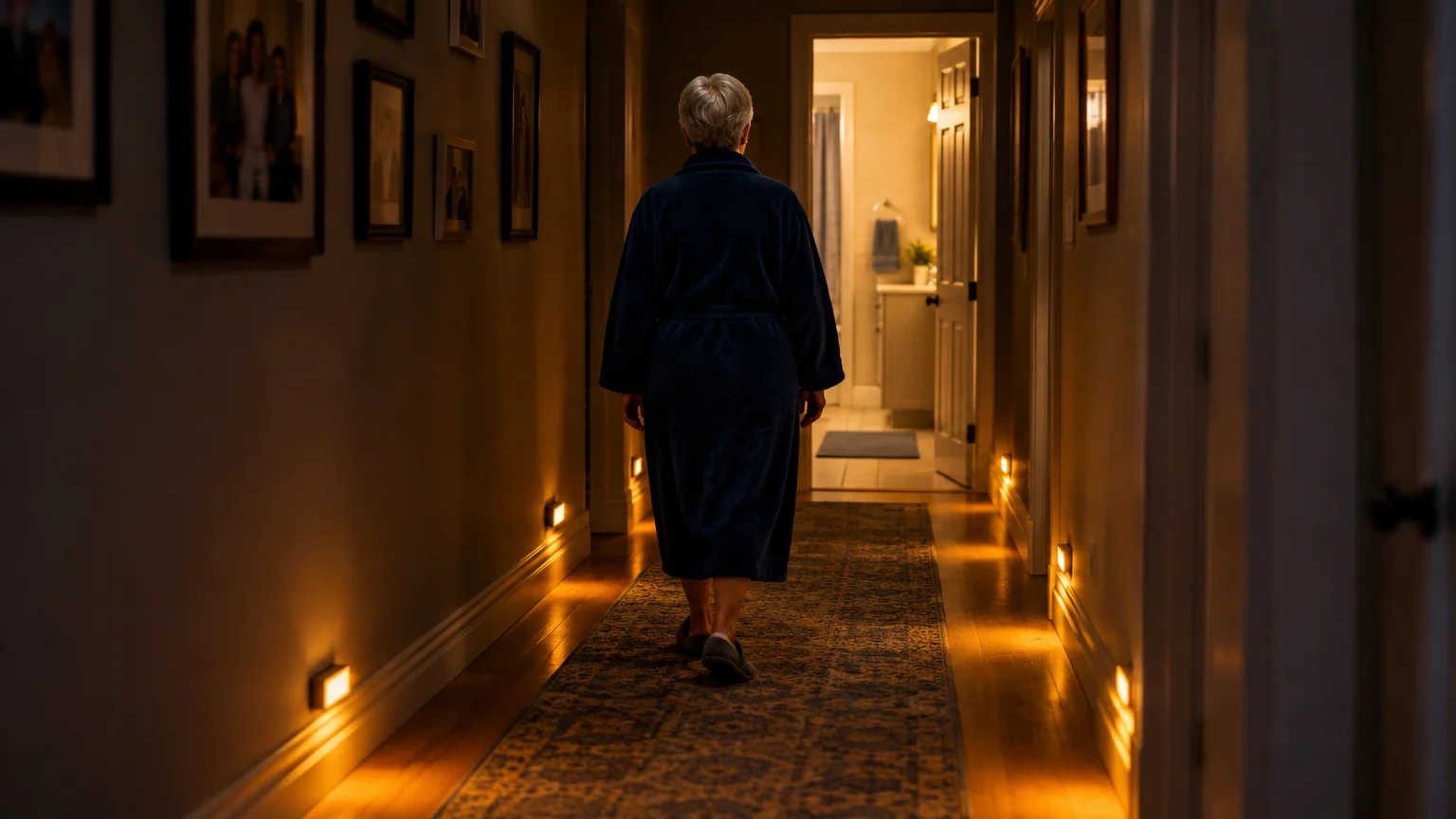
Each light features a passive infrared range of 10 feet and an automatic shut-off duration of 30 seconds. As Eleanor steps past her bedroom threshold, the first light turns on instantly, casting warm amber light across her slippers.
Before she reaches the midpoint, the second sensor catches her movement and illuminates the central corridor. By the time she approaches the bathroom door, the third light activates, providing uninterrupted floor illumination across all 22 feet.
Because the amber 2,400K glow preserves her pupil dilation, her eyes adjust smoothly without squinting. Each 0.5-watt unit costs roughly $0.40 per year to operate, giving Eleanor full path coverage for about $1.20 in annual electricity.
Integrating Smart Home Plugs and Routines
Many older adults combine simple plug-in hardware with connected home automation systems. Recent research documented in the Pew Research study on older adult technology adoption demonstrates that smart home device usage among adults over 65 continues to expand steadily.
You can connect your smart lights to a central voice assistant by learning how to set up an Amazon Echo to run automated evening routines.
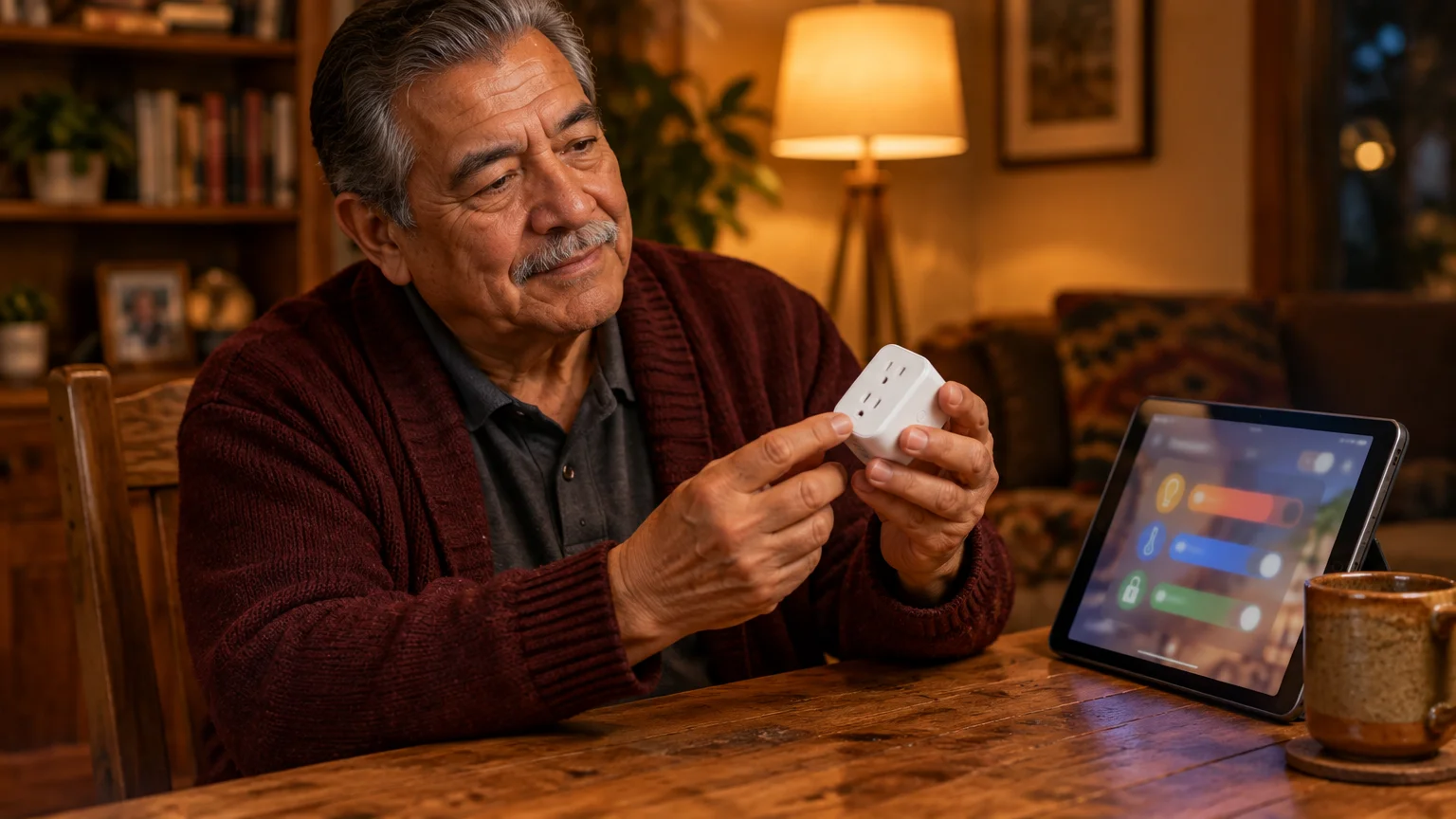
If you already own an Amazon Echo speaker or Google Nest display, you can connect smart wall plugs to schedule lighting times. Smart plugs sit between your wall outlet and night light, allowing you to cut power entirely during daytime hours.
To configure an automated voice routine, open the companion app on your tablet or smartphone. If you need step-by-step assistance setting up connected hardware, consult the official Amazon Alexa help center for device discovery instructions.
Ensure that your automated schedule activates the plug at least 30 minutes before sunset. This schedule guarantees that your hallway illumination remains active if you wake up unexpectedly before dusk transitions fully into nighttime.
Smart plugs require a stable 2.4 GHz home Wi-Fi network connection to receive automated timer updates. If your home internet experiences periodic dropouts, standard standalone motion night lights provide greater reliability because they operate independently of home networks.
- Set smart routines to turn on pathway outlets automatically at 7:00 PM and switch them off at 7:00 AM.
- Group multiple smart plugs under a single room name such as Hallway Path for quick voice testing.
- Use the Alexa app’s voice command test feature to confirm your plugs respond to spoken prompts.
- Keep dedicated standalone sensor lights in reserve along stair landings where Wi-Fi failures could create safety risks.
Frequently Asked Questions
Will a hallway motion sensor night light keep me awake at night?
No, provided you select an amber or warm white model rated between 2,200K and 2,700K with brightness below 30 lumens. Warm light does not suppress melatonin production or cause pupil glare like cold daylight bulbs.
What should I do if my pet triggers the motion night lights continuously?
You can mask the bottom third of the plastic sensor dome with a small strip of white electrical tape. This modification blocks low-angle heat detection from dogs and cats while still picking up human knee and waist movements.
Can I plug motion-activated night lights into an extension cord?
Plugging night lights directly into permanent wall receptacles provides the safest electrical connection and proper sensor alignment. Extension cords create floor-level trip hazards and position the motion sensor at unpredictable angles that reduce detection accuracy.
How long do modern LED motion sensor night lights last before burning out?
Most quality LED night lights operate for roughly 25,000 to 50,000 hours of active illumination. Because motion-activated models only illuminate for brief intervals when you walk by, the internal LEDs typically last well over seven to ten years.
Note: Menus and button names change with software updates. These steps were written for current versions as of 2026; if a screen looks different on your device, the maker’s support page linked above has the latest wording.
ClearTechGuide is independent and is not affiliated with Apple, Google, Microsoft, Amazon or any other company mentioned.