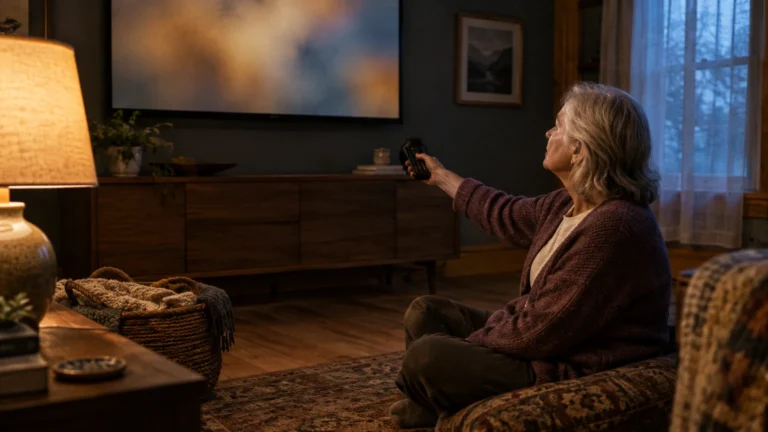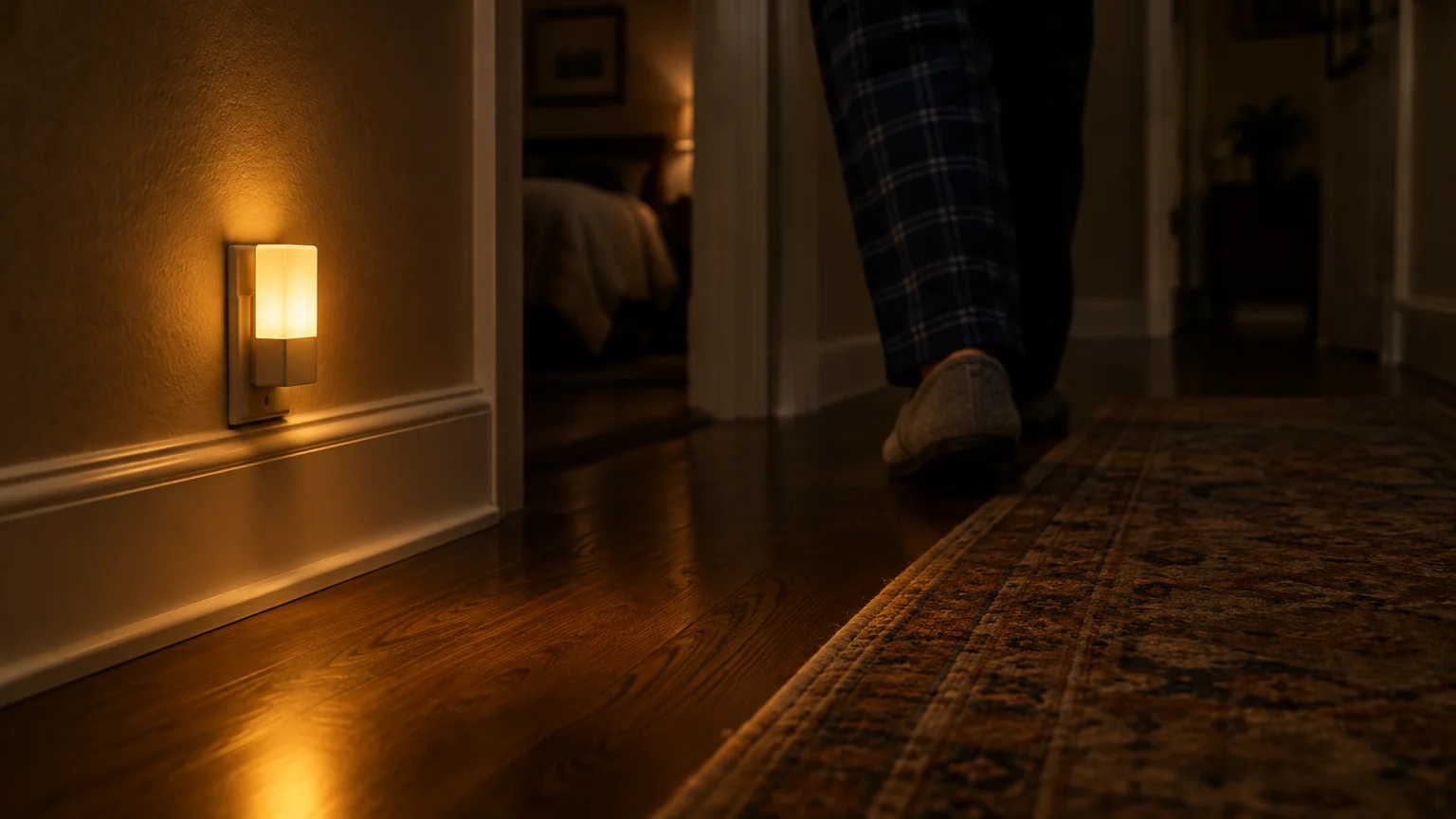
If you are 74 and living independently, walking down a dark hallway at night carries serious tripping hazards. Standard white night lights often create harsh visual glare that temporarily blinds eyes recovering from cataract surgery.
Switching to 590-nanometer amber light wavelengths protects your night vision. Unlike blue-white LEDs that trigger sharp pupillary constriction, amber lighting preserves dark adaptation while illuminating floor hazards clearly.
Clinical studies show visual cue lighting reduces nighttime falls by up to 34%. We examine the most effective amber fixtures available as of 2026 to help you move safely through your home.
In this guide7 sections
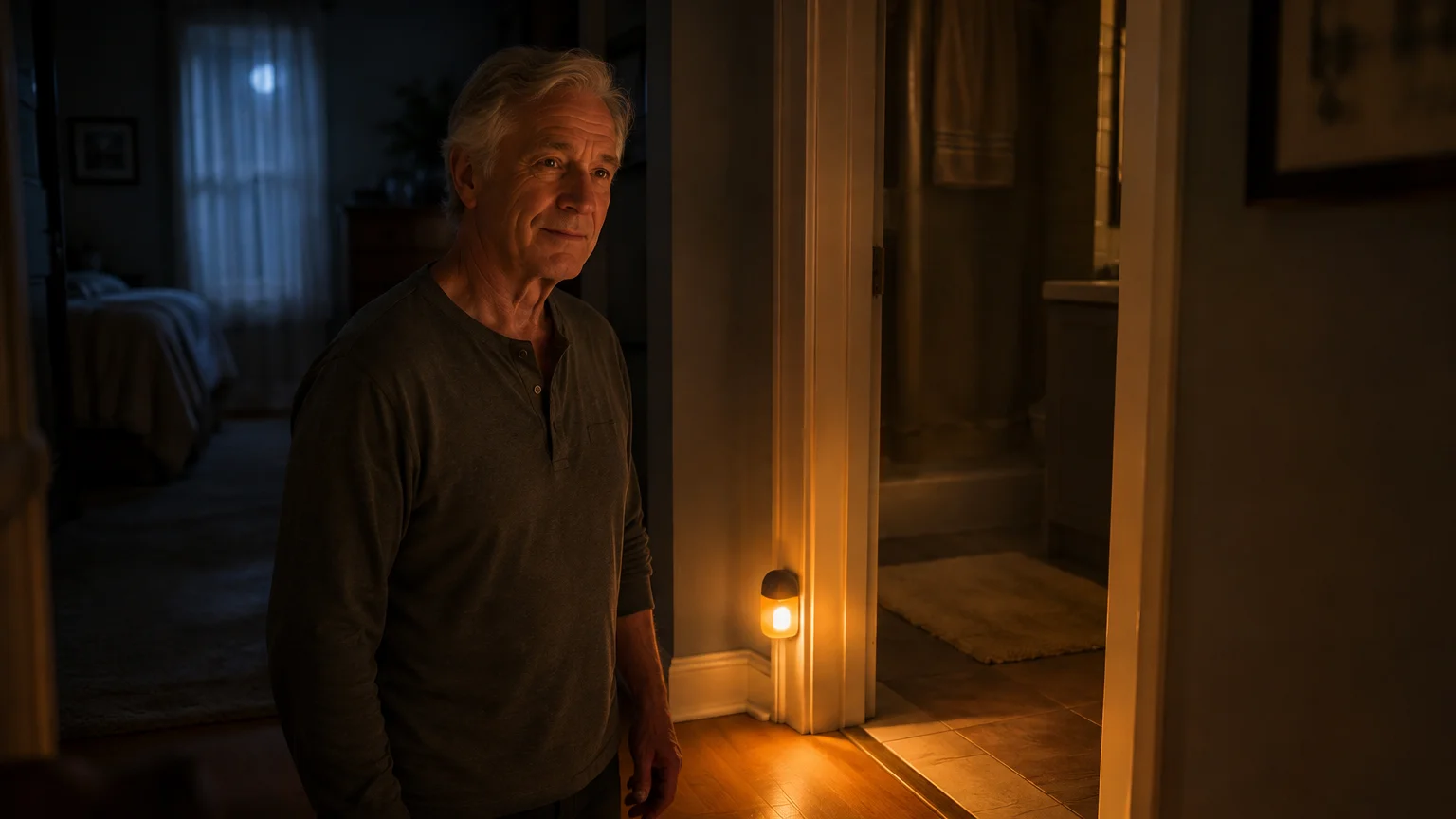
Why 590nm Amber Wavelengths Protect Aging Eyes
Aging eyes experience physical changes that make moving in the dark difficult. By age 60, your eyes require roughly three times more ambient light to see clearly than a 20-year-old eye requires.
If you keep a phone by your bed, you can also turn off auto-brightness on Android to prevent sudden screen glare from shocking your eyes at night.
At the same time, aging corneas and intraocular lens implants scatter light across your retina. This scattering creates sharp, disorienting glare when you encounter standard cool-white illumination at night.
A nanometer is a microscopic unit of measurement used to define the exact wavelength of light. Standard cool-white LEDs emit short-wavelength blue light between 450 and 480 nanometers.
Blue wavelengths stimulate specialized retinal ganglion cells that suppress melatonin and cause immediate pupillary constriction. Pupillary constriction is the involuntary shrinking of your pupil when exposed to sudden bright illumination.
When your pupil constricts abruptly, your surrounding peripheral field vanishes into total blackness. Recovering your sight after that bright flash can take several dangerous minutes.
Dark adaptation is the biological process your eyes use to adjust when entering dark spaces. Amber light, which operates at 590 to 615 nanometers, bypasses those sensitive photoreceptors completely.
Kelvin is a measurement scale that indicates whether a light source appears warm yellow or cool blue. Selecting fixtures between 1600K and 2000K ensures your eyes remain adapted to darkness while illuminating floor baseboards.
Fall Risks and Clinical Lighting Evidence
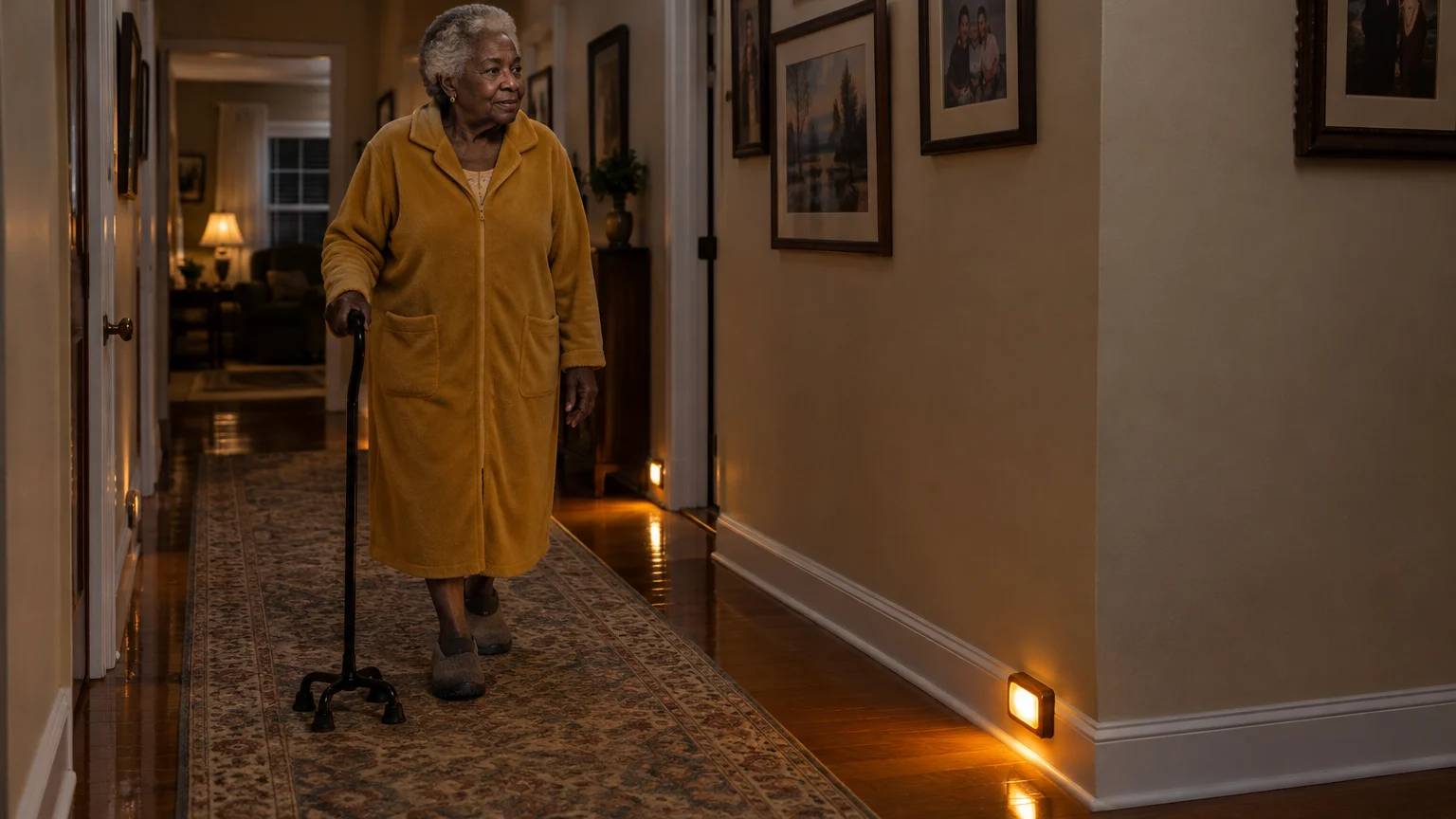
Tripping in the dark represents one of the greatest threats to living independently. Centers for Disease Control and Prevention (CDC) records show that over 14 million older adults report falling each year.
Alongside good nighttime lighting, understanding how to use a medical alert device ensures rapid help is available if an accidental slip ever occurs.
Those incidents result in approximately 37 million total falls annually across the United States. Between 3 million and 4.5 million emergency department visits and over one million hospitalizations occur as a result.
Nearly 319,000 of those annual hospital stays stem directly from catastrophic hip fractures. Finalized CDC mortality data released in 2026 confirmed that unintentional falls claimed over 43,000 older American lives in 2024.
Between 2003 and 2023, the fall mortality rate rose by more than 70% for adults aged 65 to 74. If you rely on a cane or walker, your physical risk climbs even faster.
National Safety Council data indicates that older adults using mobility devices are 11 times more likely to fall over a three-month period. Inadequate nighttime lighting dramatically increases that hazard.
Clinical studies show that proper wavelength management prevents accidents. Research by the Mount Sinai Light and Health Research Center and the University of North Carolina revealed striking improvements in residential care environments.
Publishing in JAMDA across 2024 and 2025, researchers found that installing low-level amber LED visual-cue lighting reduced nighttime falls by 30% to 34%. Amber perimeter lighting helped residents distinguish obstacles without temporary blindness.
Older adults regularly implement these practical adjustments to protect their living spaces.
Top Amber Night Lights Compared
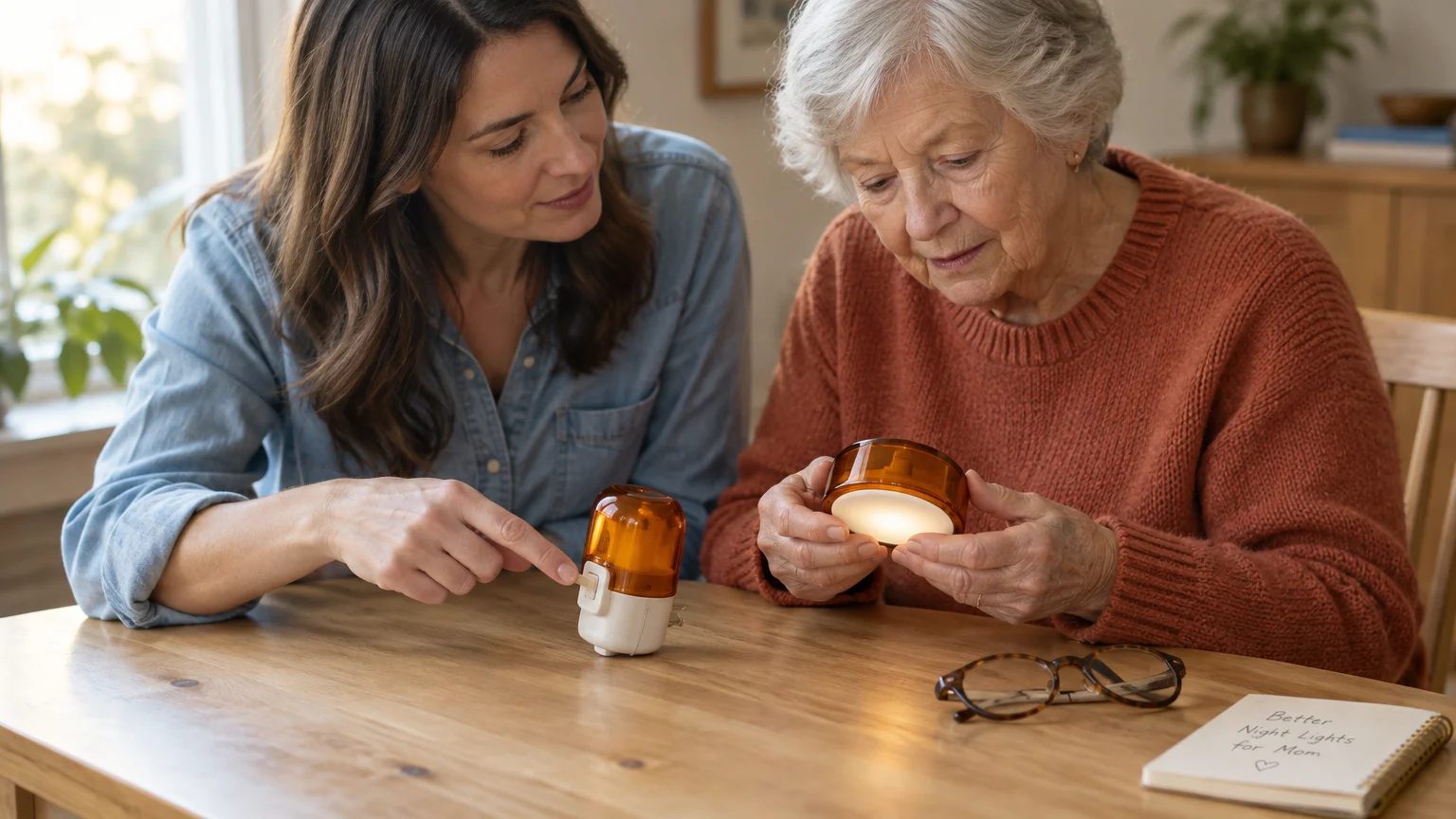
Selecting the right fixture requires matching your hallway layout to the correct sensor mechanism. Quality amber fixtures avoid upward glare while casting clean contrast across baseboards and rugs.
If your hallways lack lower outlets, learning how to use smart light bulbs in existing fixtures lets you schedule warm, low-glare illumination automatically.
Before ordering safety hardware online, verify that you purchase from reputable sellers. Review the FTC guide to safe online shopping to guard your personal and payment details on retail sites.
| Model | Color Spectrum | Sensor Activation | Power Draw | Price (as of 2026) |
|---|---|---|---|---|
| L LOHAS LED Amber Night Light | 1600K–2000K (595 nm) | Dusk-to-dawn light sensor | 0.3W–0.6W | $9.99–$17.99 (2-pack) |
| AUVON Motion Sensor Night Light | 1600K amber (or 2200K/2700K warm white) | Passive infrared (10–15 ft) | Up to 1.3W | $15.00–$25.00 (2-pack) |
| Tatazone Under-Bed COB Strip | 1800K (615 nm) | RF remote and inline dimmer | $20.00–$25.00 (kit) | |
| ThirdReality Smart Multi-Function | RGB color (adjustable to amber) | Zigbee local motion sensor | 1.0W | $25.00–$35.00 (2-pack) |
Examine these four design specifications before selecting fixtures for your living areas:
- True narrow-band spectrum: Verify the manufacturer specifies 1600K to 2000K or 590 to 615 nanometers rather than white LEDs covered by yellow plastic.
- Downward-louvered housing: Select lights that shield the LED diode from direct eye line and direct lumens downward toward your walking path.
- Local passive infrared triggers: Choose motion detectors that function locally so they turn on even if your home internet connection fails.
- Low active lumen output: Stick to 5 to 20 lumens per fixture to avoid triggering pupillary contraction in pitch darkness.
Worked Example: Hallway Setup and Budget
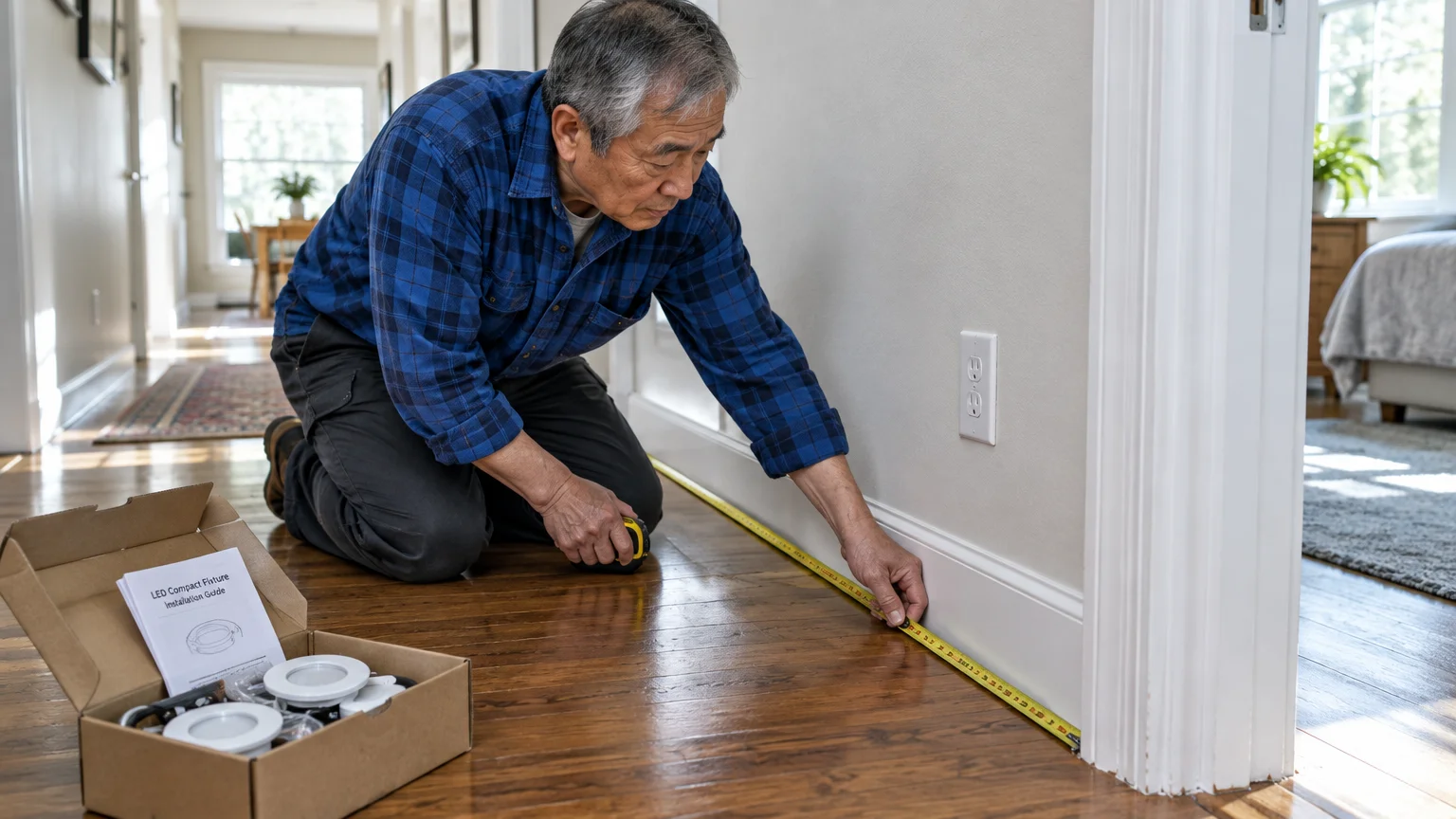
Consider a practical setup for a 25-foot hallway linking your bedroom to the bathroom. You want clear floor illumination at night without touching a wall switch or waking your brain.
At the base of your bed frame, you install one Tatazone 1800K flexible strip kit. The adhesive strip hides underneath the bed rail, and you can turn it on or dim it from bed using the included RF remote.
This under-bed strip costs $22 as of 2026. It bathes the floor in soft 1800K amber light without shining upward into your eyes.
Along the 25-foot hallway, you place a two-pack of AUVON motion-sensor amber lights in low electrical sockets. This two-pack costs $16, bringing your total hardware expenditure to $38.
Operating expenses remain negligible throughout the year. Modern amber LED night fixtures draw between 0.3 watts and 0.6 watts during active nighttime hours.
Running these three fixtures consumes approximately 1.5 kilowatt-hours over twelve months. At standard residential electric utility rates, you spend less than $0.35 per year on total electricity for this protection.
How to Position and Set Up Pathway Lighting
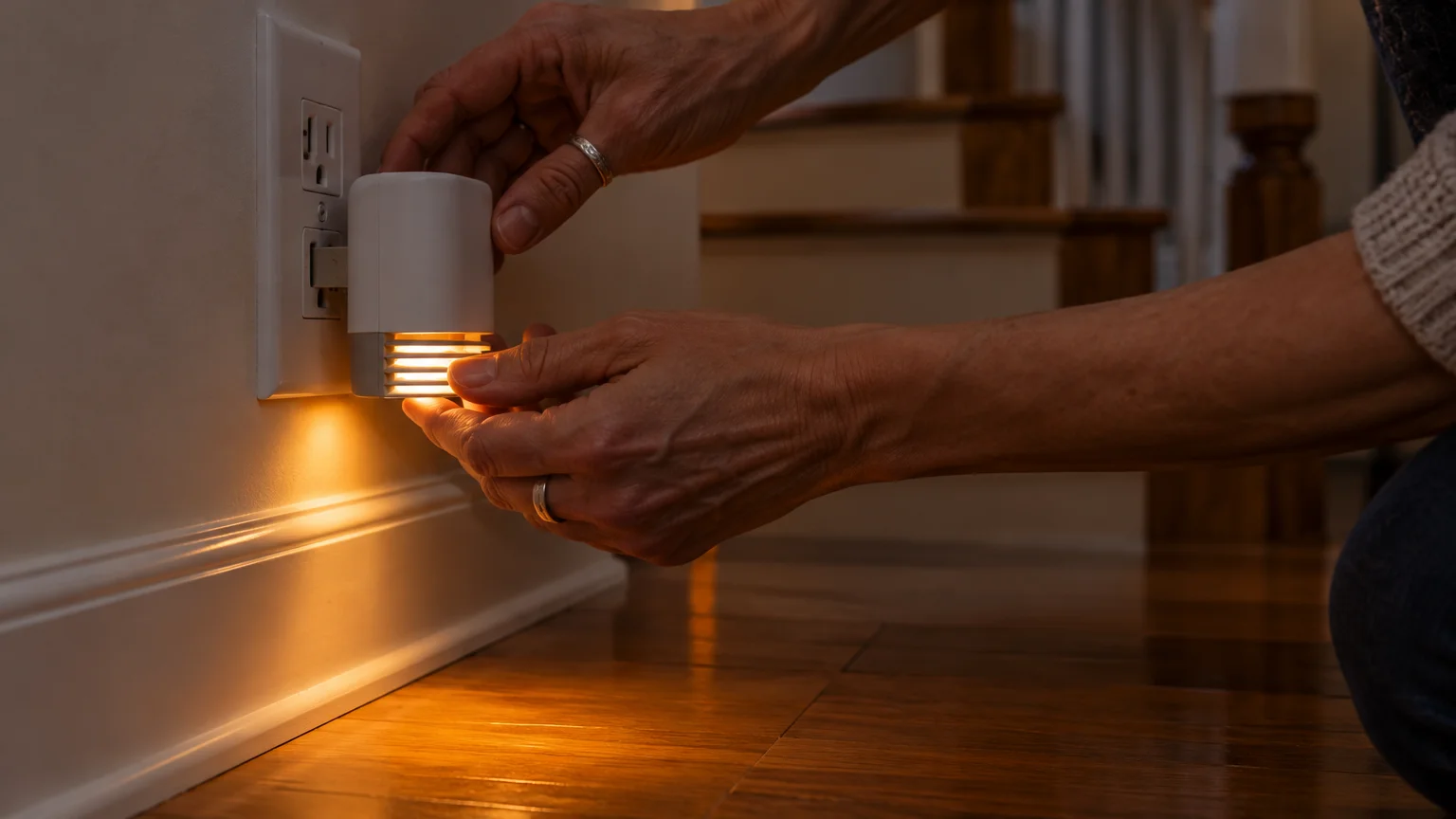
Plugging a night light into a wall outlet controlled by a wall switch can cut power unexpectedly if someone flips the switch. Confirm your chosen outlets receive continuous electricity before installing fixtures.
Pairing clear pathway lighting with keypad smart locks for stiff hands helps older adults navigate both interior hallways and exterior doors safely.
If you prefer to automate low-wattage side lamps along your walking path, learning how to set up and use smart plugs provides convenient scheduled illumination.
Many compact night lights feature microscopic slider switches on the bottom edge. If you have difficulty seeing small text, consult the Apple guide to accessibility features on iPhone to use the digital Magnifier tool.
Follow these steps to set up your hallway amber lighting system:
- Inspect your target electrical sockets along the baseboard to ensure they stay powered when wall switches are turned off.
- Slide the physical mode selector switch on the back of the fixture to Amber or 1800K.
- Move the power control slider switch from OFF to AUTO to activate the passive infrared motion detector.
- Adjust the brightness dial to the lowest setting, selecting roughly 5 Lumens for initial nighttime testing.
- Insert the plug firmly into the lower socket of your electrical outlet so the top socket remains available for vacuum cleaners or medical equipment.
- Walk down your hallway in the dark to verify the sensor triggers when you are 10 feet away.
If you connect smart Zigbee or Wi-Fi night lights, check your smart speaker setup. Review Amazon Alexa help resources to create automated routines that disable bright overhead ceiling lights after 9:00 PM.

Medicare Rules and Insurance Coverage
Understanding how medical insurance treats fall prevention lighting helps you manage out-of-pocket expenses. Original Medicare (Parts A and B) does not pay for night lights because they do not meet Durable Medical Equipment standards.
Review official Medicare durable medical equipment coverage guidelines to see which doctor-prescribed safety devices qualify for Part B benefits.
However, many Medicare Advantage (Part C) plans offer quarterly Over-the-Counter (OTC) benefit allowances. You can often purchase motion-activated amber safety fixtures through these plan-funded health catalogs at zero out-of-pocket expense.
State Medicaid Home and Community-Based Services (HCBS) waivers also provide home modification grants for qualified older adults. These programs cover physical pathway adaptations to prevent falls and preserve home independence.
In December 2025, Medicare announced the Long-term Enhanced ACO Design (LEAD) model and released its application details in March 2026. This initiative includes an episode-based falls prevention program that provides time-limited services and home safety modifications to boost independence for Medicare beneficiaries.
Contact your Medicare Advantage plan administrator to explore these reimbursement options:
- Over-the-Counter allowances: Inquire whether your plan catalog includes plug-in fall-prevention night lights under home safety supplies.
- Supplemental aging benefits: Ask if your coverage includes an annual allowance for home fall risk hazard reductions.
- Medicaid waiver modifications: Contact your local Area Agency on Aging to evaluate state-level home accessibility grants.
Frequently Asked Questions
Why is amber light better than red light for night vision?
Amber light provides superior spatial contrast compared to red light while still preventing melatonin suppression. True red light can make walking boundaries and low obstacles appear flat or indistinct to aging eyes.
Wavelengths between 590 and 615 nanometers deliver clear depth perception without triggering pupillary glare.
Will amber night lights keep me awake at night?
No, amber light does not disrupt circadian rhythms or wake your brain. Specialized photoreceptor cells in your retina only react to blue-green light wavelengths below 500 nanometers.
Because 590-nanometer amber light bypasses these melatonin-suppressing sensors, you can return to deep sleep quickly after nighttime bathroom visits.
Do smart Wi-Fi night lights work during an internet outage?
Standalone plug-in models with local motion sensors work normally during an internet outage because their internal circuits require no data network.
Smart fixtures relying on cloud automation may fail to trigger if your home Wi-Fi disconnects. We recommend local sensors for safety-critical pathways.
How high off the floor should I plug in an amber light?
Place pathway fixtures 12 to 18 inches above the floor in lower electrical wall outlets. This height casts light across walking surfaces without directing glare into your eyes.
Note: Menus and button names change with software updates. These steps were written for current versions as of 2026; if a screen looks different on your device, the maker’s support page linked above has the latest wording.
ClearTechGuide is independent and is not affiliated with Apple, Google, Microsoft, Amazon or any other company mentioned.