You have likely spent time searching for answers about a new prescription, a persistent ache, or a diet trend you saw on the news. The internet offers an incredible library of medical knowledge at your fingertips—a resource that generations before us could only imagine.
This access empowers you to take an active role in your wellness and have more meaningful conversations with your doctor. However, the sheer volume of information can feel overwhelming; it is often difficult to distinguish a breakthrough medical study from a cleverly disguised advertisement.
Beyond text-based articles, you can also use YouTube to watch videos to find visual demonstrations of wellness exercises or healthy cooking tips.
Once you find trustworthy medical information, you can use it to better prepare for telehealth appointments where you can discuss your research with a qualified doctor.
Searching for health information requires a balance of curiosity and caution. While most websites aim to be helpful, some exist solely to sell unproven products or harvest your personal data.
You do not need to be a computer scientist to navigate these waters safely.
By learning a few specific habits and knowing which red flags to watch for, you can use the web as a powerful tool for your health without falling prey to scammers—people trying to trick you out of money or information—or misinformation.
This guide provides you with the practical steps to verify medical advice, protect your privacy during your research, and recognize the sophisticated tactics used by those who might try to exploit your health concerns.
You deserve to feel confident and secure every time you open your browser to learn about your well-being.
In this guide8 sections
- The Gold Standard of Health Information Sources
- Recognizing Medical Scams and Miracle Cures
- The Anatomy of a Trustworthy Health Article
- Protecting Your Privacy While Searching
- Safe Online Shopping for Medications and Supplements
- Navigating Social Media and Support Groups Safely
- What to Do If You Encounter a Health Scam
- Frequently Asked Questions

The Gold Standard of Health Information Sources
When you start a search for medical advice, your first destination matters. Search engines like Google or Bing often prioritize popular content, but popularity does not always equal accuracy.
To ensure you receive the most reliable data, you should look for websites managed by government agencies, major medical universities, or established non-profit organizations.
Government websites ending in .gov are your strongest allies. These sites are funded by taxpayers and undergo rigorous peer review—a process where other experts check the work for accuracy before it is published.
The National Institutes of Health (NIH) and the Centers for Disease Control and Prevention (CDC) provide vast databases written specifically for the public. For example, the NIH manages MedlinePlus, which offers clear explanations of diseases, symptoms, and health conditions without the clutter of flashing advertisements.
Academic institutions and large hospital systems also provide excellent online research materials. Look for URLs ending in .edu or names you recognize for clinical excellence, such as the Mayo Clinic or Cleveland Clinic.
These organizations employ thousands of medical professionals who update their content based on the latest clinical trials and scientific discoveries.
Health information moves fast. A study from five years ago might be outdated today; always look for a “last reviewed” or “updated on” date at the bottom of the page to ensure the advice reflects current medical standards.
Non-profit organizations dedicated to specific conditions—such as the American Heart Association or the American Diabetes Association—are also excellent resources. These sites focus on education and patient support rather than selling a specific brand of medication.
When you stick to these “Gold Standard” sources, you significantly reduce the risk of encountering “phishing”—fake emails or messages trying to trick you into giving personal information—often disguised as “exclusive” health reports.

Recognizing Medical Scams and Miracle Cures
Scammers understand that health is a deeply personal and sometimes emotional topic. They often target people looking for relief from chronic pain, weight loss solutions, or memory support.
These individuals use sophisticated marketing to make their products look legitimate, often using “malware”—bad software that can harm your computer or steal information—hidden in “free” health downloads or tracking tools.
Be aware that fraudsters may also follow up on your web searches with phone scams that claim to be from your insurance provider or Medicare.
If you receive a pop-up warning that your computer is infected while searching for medical advice, it is likely a trick; learning how to recognize tech support scams will help you stay safe.
Understanding how to spot fake websites is your first line of defense against those trying to sell fraudulent health solutions.
One of the most common red flags is the “miracle cure” claim. If a website suggests that a single product can treat a wide range of unrelated ailments—such as curing both cancer and arthritis—it is almost certainly a scam.
True medical breakthroughs are rarely kept secret by “Big Pharma,” and they are never sold through high-pressure email campaigns or “limited time only” pop-up ads.
Watch out for celebrity endorsements that seem out of place. With the rise of artificial intelligence, scammers can now create “deepfake” videos that make it look like a trusted news anchor or a famous doctor is praising a specific supplement.
If you see a video of a celebrity claiming they found a “secret” to health that their doctors didn’t want them to know, treat it with extreme suspicion.
These videos are often designed to lead you to a site that will steal your credit card information.
Check for “Success Stories” that seem too good to be true. While legitimate sites may share patient testimonials, scam sites rely solely on them.
If a site provides dozens of glowing reviews but no links to clinical studies or professional medical backing, the “patients” are likely fictional characters created by the scammer.
According to the Federal Trade Commission (FTC), health-related fraud costs consumers hundreds of millions of dollars annually, with supplement scams being among the most frequent complaints.
The Anatomy of a Trustworthy Health Article
A reliable health article has specific characteristics that you can identify within the first thirty seconds of reading. Think of this as your “authenticity checklist.”
When you land on a page, look for the following elements:
- Clear Author Credentials: Is the article written by a medical doctor (MD), a registered nurse (RN), or a certified health journalist? Reliable sites proudly display the names and credentials of their writers and medical reviewers.
- Citations and Links: Does the article link back to the original source of its data? For instance, if an article says, “A new study shows that walking 30 minutes a day lowers blood pressure,” it should provide a link to the medical journal or the university where the study was conducted.
- A Balanced Perspective: Science is rarely one-sided. Trustworthy information discusses both the benefits and the potential risks or side effects of a treatment. If an article presents a medication as having “zero side effects,” it is not being honest with you.
- Contact Information: Legitimate organizations provide a way to contact them. Look for an “About Us” page with a physical address and a phone number. Scammers prefer to remain anonymous or use vague contact forms.
- Absence of Sensationalism: Professional medical advice uses calm, clinical language. If the headline uses all capital letters, multiple exclamation points, or phrases like “DOCTORS ARE SHOCKED,” you are likely looking at “clickbait” designed to generate ad revenue rather than provide information.
By scanning for these markers, you can quickly filter out the noise. If you are unsure about a specific claim, you can use the Better Business Bureau — Scam Tracker to see if others have reported the website or the product for fraudulent activity.

Protecting Your Privacy While Searching
Your health history is some of your most sensitive information. When you search for symptoms or treatments, your browsing data can be tracked by advertisers who want to target you with specific—and often unwanted—products.
Even worse, if you enter your personal details into an unsecure site, you risk identity theft.
Because these platforms are often used to spread misinformation, it is vital to know how to avoid common scams targeting seniors on social media before joining any health support groups.
Always check for the “padlock” icon in your browser’s address bar. This icon indicates that the website uses encryption to protect the data you send and receive.
However, even a secure site might have poor privacy policies. Avoid taking “health quizzes” on social media that ask for your email address or date of birth.
These quizzes are frequently used to gather data for marketing or to guess your security questions for other accounts.
When using patient portals or health apps, you should always enable “two-factor authentication”—an extra security step, like getting a code texted to your phone.
This ensures that even if someone manages to guess your password, they cannot access your medical records without that second code.
To keep your various health accounts secure, consider using a “password manager”—a secure app that remembers all your passwords for you—so you can have a unique, strong password for every site without having to memorize them all.
Protecting your digital footprint is just as important as locking your front door. Your search history can reveal a lot about your private life; use privacy-focused search engines or “incognito mode” in your browser if you want to keep your medical inquiries private.
Be wary of websites that ask for your Social Security number or your detailed medical history just to read an article.
A legitimate information site like AARP Technology Resources or Medicare.gov will never ask for your private identification numbers simply to browse their educational content.
Safe Online Shopping for Medications and Supplements
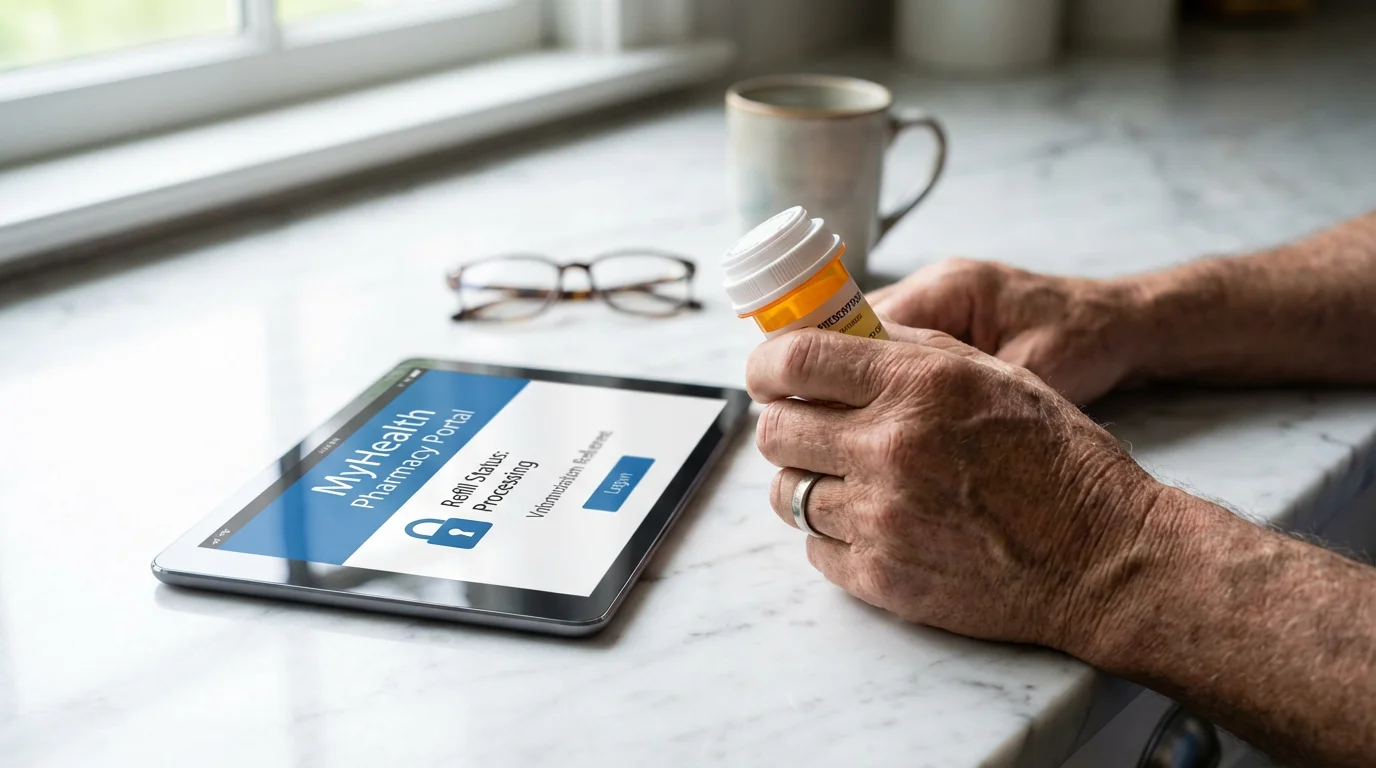
The convenience of having medications delivered to your door is undeniable; however, the online pharmacy market is rife with “suspicious”—something that seems wrong or too good to be true—operators.
According to the Cybersecurity & Infrastructure Security Agency (CISA), illegal online pharmacies often sell counterfeit drugs that may contain the wrong ingredients, no active ingredients, or even toxic substances.
To shop safely, only use pharmacies that are licensed in the United States and require a valid prescription from your doctor. If a website offers to sell you “prescription-only” medication without a prescription, leave the site immediately.
This is a primary indicator of an illegal operation that may also be a front for stealing your credit card information.
You can verify an online pharmacy by looking for the “Verified Internet Pharmacy Practice Sites” (VIPPS) seal or by checking with your state’s board of pharmacy. Legitimate pharmacies will also provide access to a licensed pharmacist who can answer your questions over the phone.
If the “contact us” section only lists an international phone number or a generic email address, it is a significant red flag.
When it comes to supplements, remember that the FDA does not approve them for safety and effectiveness before they are sold. This means you must be even more diligent.
Stick to well-known brands and retailers. If a supplement claims to be a “natural alternative” to a prescription drug, talk to your doctor before purchasing it.
Scammers often use these claims to target people who are concerned about the costs of traditional medicine.

Navigating Social Media and Support Groups Safely
Social media platforms like Facebook can be wonderful places to find communities of people dealing with similar health challenges. These groups offer emotional support and shared experiences that can make a difficult diagnosis feel less lonely.
However, they are also breeding grounds for medical misinformation and sophisticated “scammers”—people trying to trick you out of money or information.
In these groups, remember that personal anecdotes are not medical evidence. Just because a “friend” in a digital group claims a certain tea cured their ailment does not mean it will work for you—or that it is even safe.
Many scammers join these groups specifically to pose as helpful patients while subtly steering people toward expensive, unverified products.
Be careful about sharing too much personal information in public or “private” groups. Insurance companies and data brokers sometimes monitor these groups to gather information about people’s health statuses.
Keep your discussions focused on support rather than specific diagnostic details. If someone sends you a “private message” out of the blue offering medical advice or a special discount on a product, do not engage.
This is a common tactic used to bypass the group’s moderators and target you directly.
Always verify any advice you receive in a support group with a trusted medical professional. Your doctor understands your specific health history, allergies, and current medications; a stranger on the internet does not.
Use these groups for the comfort of community, but look to USA.gov or your healthcare provider for the facts.

What to Do If You Encounter a Health Scam
If you realize you have been targeted by a health scam, do not feel foolish. Scammers are professional manipulators who spend all day refining their tricks.
They use psychological pressure and polished graphics to deceive even the most cautious people. If you have shared information or lost money, taking swift action is the best way to protect yourself and others.
First, secure your finances. If you provided your credit card or bank account information to a suspicious site, contact your financial institution immediately. They can freeze your accounts and issue new cards to prevent further unauthorized charges.
Most banks have fraud departments specifically trained to handle these situations.
Second, protect your identity. If you shared your Social Security number or other identifying details, go to Social Security Administration (SSA.gov) to learn about the steps for protecting your record. You should also monitor your credit report for any unusual activity.
Setting up a “fraud alert” with the major credit bureaus is a proactive way to stop scammers from opening new accounts in your name.
Third, report the incident. Reporting helps authorities track down scammers and prevent them from hurting others. You should file a report with the Federal Trade Commission (FTC) at ReportFraud.ftc.gov.
If the scam happened through an email or a website, you can also report it to the FBI Internet Crime Complaint Center (IC3.gov). These agencies use your reports to build cases against criminal organizations and shut down fraudulent websites.
Finally, tell someone you trust. Whether it is a family member, a friend, or your doctor, talking about the experience can help alleviate the stress.
You are not alone, and by sharing your story, you might help a friend avoid the same trap. Remember: it is not your fault that someone decided to be dishonest.
Frequently Asked Questions
How can I tell if a health website is just an advertisement?
Look for the word “Sponsored” or “Ad” near the top of the page or next to specific links.
Additionally, if every link on the page leads to a “Buy Now” button for a single product, the site is a marketing tool, not a neutral information source. Reliable sites keep their educational content clearly separated from any advertisements.
What should I do if I already clicked a link in a suspicious health email?
Do not enter any more information. Close your browser immediately.
It is a good idea to run a scan with reputable antivirus software to ensure no “malware” (bad software) was installed on your device.
If you entered a password, change it immediately on the real version of that website—and anywhere else you use that same password.
How do I know if a call about my Medicare benefits is real or a scammer?
Official government agencies like the Social Security Administration or Medicare.gov will almost never call you out of the blue to ask for your personal information. They usually communicate through official mail.
If you receive a call that feels “suspicious” (seems wrong or too good to be true), hang up and call the official number found on the back of your insurance card or at 1-800-MEDICARE.
Are health apps on my phone safe to use?
Most major health apps from reputable hospitals or insurance companies are safe, but you must check their privacy settings. Look for apps that offer “two-factor authentication” (an extra security step) and read their data-sharing policy.
If an app is free and not affiliated with a medical provider, they may be selling your data to advertisers to make money.
Moving Forward with Confidence
The internet is a vast landscape, but you now have the map and the compass needed to navigate it safely. Finding reliable “health information” (medical advice) is about checking your sources, protecting your “suspicious” (something that seems wrong) data, and trusting your instincts.
When you stick to established institutions and maintain a healthy level of skepticism toward “miracle” claims, you turn the web into a supportive partner in your healthcare journey.
Your “online research” (searching for facts) is a sign of your commitment to your own well-being. By staying informed and alert, you protect not only your health but also your financial security and privacy.
If you ever feel unsure, remember that help is only a phone call or a verified click away through resources like the AARP Fraud Watch Network or your own primary care physician. You are in control of your digital life—and your health.
Disclaimer: This article provides general information about online safety and is not a substitute for professional advice.
If you believe you’ve been a victim of fraud, contact your bank immediately and report the incident to the FTC at ReportFraud.ftc.gov or call 1-877-382-4357. If you’ve lost money, also file a report with your local police.
Keywords: health information, online research, medical advice, online safety for seniors, recognize medical scams
Meta Description: Learn how to find reliable health information online, verify medical advice, and protect your privacy from scammers with this comprehensive guide for seniors.